


the t.bone SC 1100




Get 90 days of free ArtMaster Singing lessons with your purchase.
Includes 3 months of full access to ArtMaster.com, your online music learning platform for modern singing and vocal development.
When you purchase this product between 15th July 2026 and 14th October 2026, you will receive a free 90-days voucher code giving you full access to our premium Singing for Beginners course, taught by Stevvi Alexander, who has worked with artists including Barbra Streisand, Justin Timberlake and Britney Spears.
Learn essential singing techniques through 34 step-by-step video lessons, covering breathing, vocal control, pitch, resonance, vocal health, confidence, and practical exercises to help you develop your voice from the ground up. Whether you are a complete beginner or want to improve your technique, the course provides a structured path to becoming a more confident singer.
After your order has been shipped, you will automatically receive your activation code by email. The subscription expires automatically after the 90-days access period.
This offer is available in English.
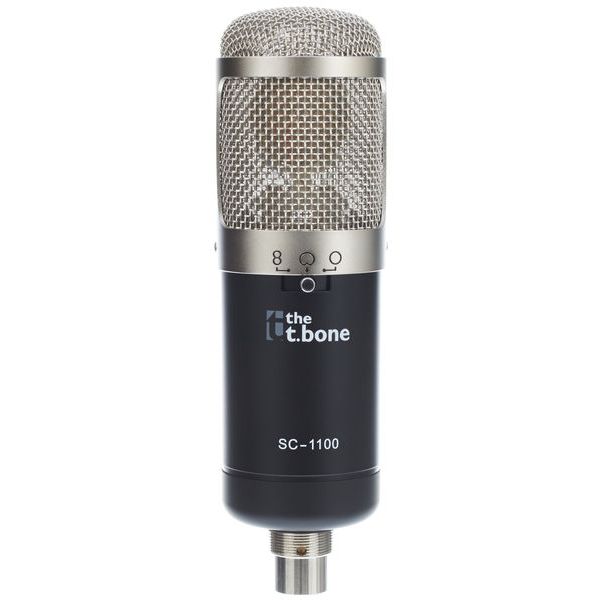
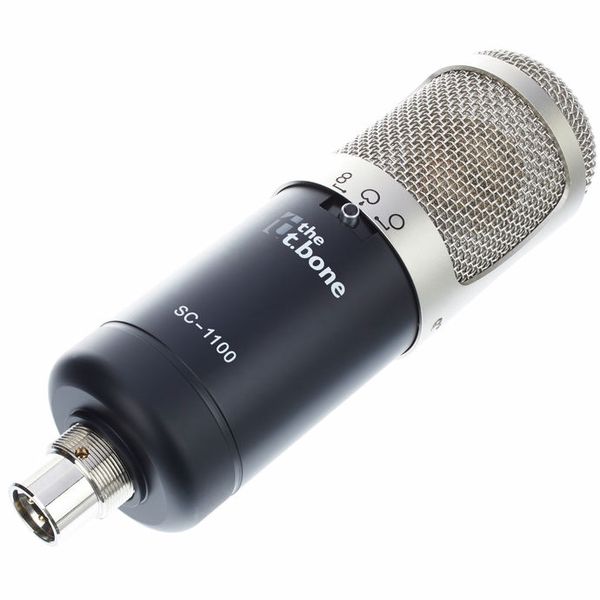
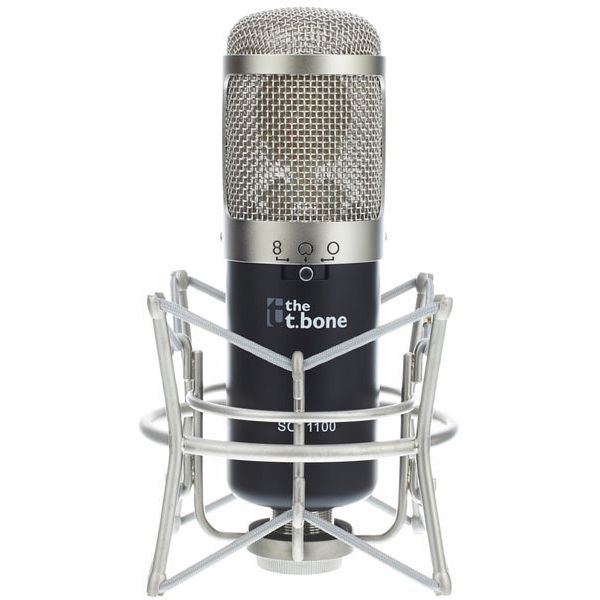
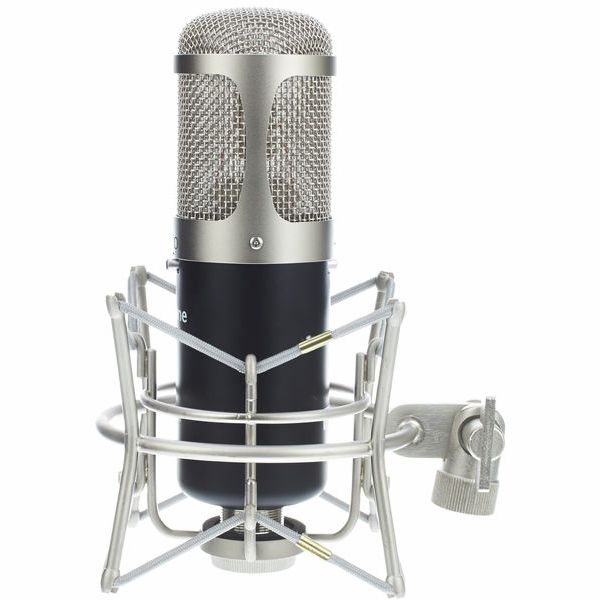
Large diaphragm studio microphone
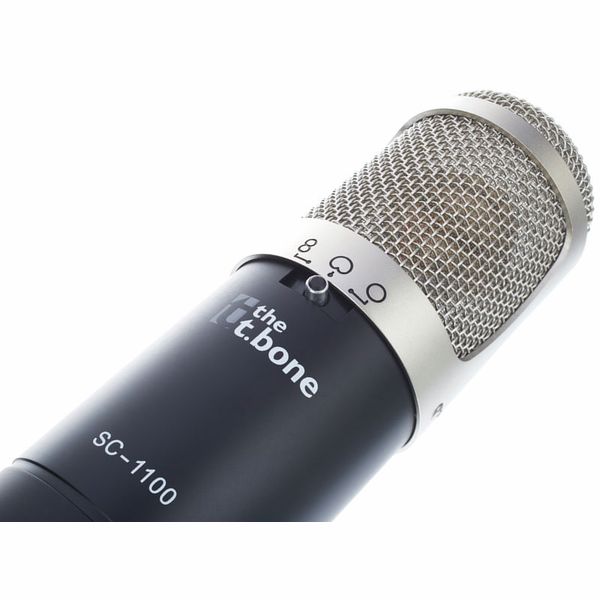
- switchable polar pattern: Omni-directional, figure-eight and cardioidLow cut switch
- Low cut switch
- Frequency response: 20 - 20,000 Hz
- Max. SPL (sound pressure level): 129 dB
- Sensitivity: 21.0 mV/Pa
- Output impedance: 200 Ohm
- Equivalent noise level [dB(A)]: 15.7 (ball)/ 15.7 (super-cardioid)/ 16.8 (eight)
- Power supply via phantom power 48 V (±4 V)
- Dimensions (max. diameter x length): 60 x 205m
- Weight microphone: 941 g
- Weight shock mount: 549 g
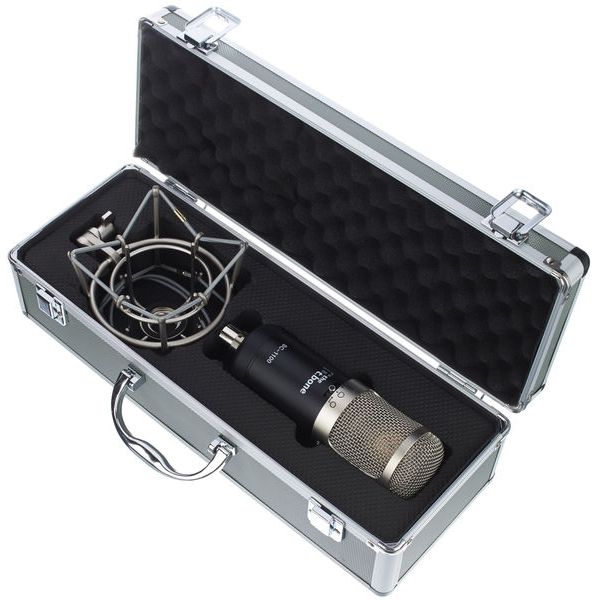
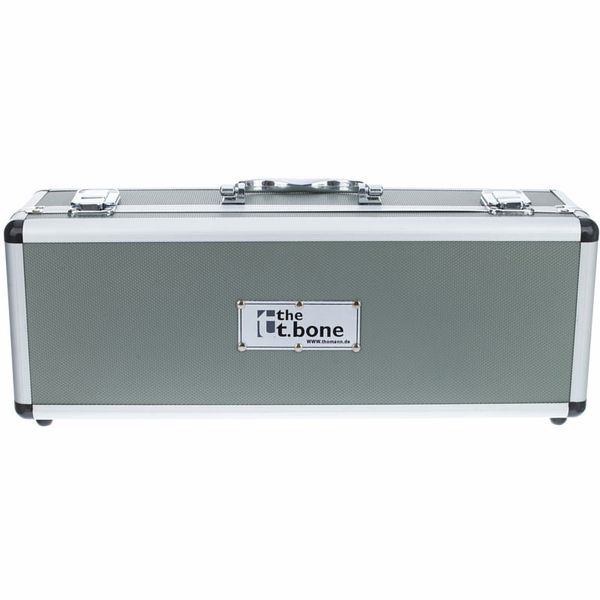
- Includes aluminum case and optimized shock-mount
-
Available since November 2002
-
Item number 156824
-
Sales Unit 1 piece(s)
-
Tube No
-
Switchable Polar Pattern Yes
-
Omnidirectional Yes
-
Cardioid Yes
-
Figure-8 Yes
-
Low Cut Yes
-
Pad No
-
shockmount included Yes
-
USB Microphone No


All-rounder with abundant features
)
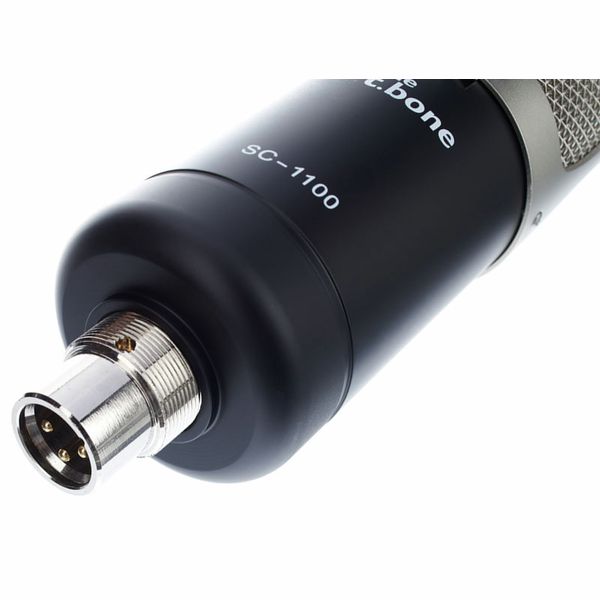
The t.bone SC 1100 is a large-diaphragm condenser studio microphone that features a double diaphragm with a directional characteristic that can be switched between "cardioid", "figure-of-eight", and "omnidirectional". In addition, there is a low cut, which can be used to filter impact sound, for example. These features make the SC 1100 flexible to use, and thanks to its metal housing, the microphone is also extremely robust - just like the supplied shock mount and case. With such lavish features, one might expect an equally lavish price - but this is far from the case: The SC 1100 costs only a fraction of what users would pay for a competitor with the same features. What is more, the clear sound and a frequency response of 20Hz to 20kHz offer excellent recording results at home and beyond.
)
Double or nothing
With its gold-sputtered 35mm double diaphragm capsule, the SC 1100 captures the sound source with clear transmission quality and depth. At the same time, it sounds very open and only starts compressing at very high volumes, while the low self-noise and the switchable low cut ensure a clean resolution. The frequency curve shows a boost in the bass as well as in the treble range, while the frequency response from 20Hz to 20kHz enables a hi-fi like sound - perfect for a clear voice. Speaking of vocals: When it comes to voice recordings, the condenser microphone is most often used with a cardioid pattern - but thanks to the double diaphragm, it can just as easily become a figure-of-eight or omnidirectional type at the flick of a switch, opening up all kinds of possible applications in everyday recording.
Perfect for beginners and beyond
With its low price, the t.bone SC 1100 is not only a good choice for beginners or newcomers - it is also recommended for advanced users, because it happens from time to time that a microphone with a different polar pattern is needed during a recording situation. So it is great to have an inexpensive but high-quality second microphone to hand. For beginners in home recording or video production, the SC 1100 is the ideal choice thanks to its price, sound, and flexibility. Users who are about to start a YouTube or streaming career and want to make the audio quality sound more sophisticated will especially find this microphone to be the perfect companion thanks to its good resolution, low cut feature, and low self-noise.
)
About the t.bone
Since 1994, the t.bone has been one of Thomann's in-house brands, and its name can be found on devices such as headphones, wireless systems, in-ear equipment, and various microphones and matching accessories. "the t.bone" products are made exclusively by renowned companies who also manufacture products for other well-known brands. This provides a clear advantage: Brand-quality products at very reasonable prices. And word gets around: One in seven Thomann customers has already bought at least one product from the t.bone.
)
Versatility is the key
The maximum sound pressure level (SPL) of 129dB and the undistorted transmission of up to 125dB SPL show that the t.bone SC 1100 works best for vocal and speech recordings, but acoustic instruments such as nylon-string guitars can also shine with the microphone's brilliant hi-fi sound, because the different polar patterns make it flexible to use in the studio. In the omnidirectional setting, it can also be used as a room mic, e.g. for drum recordings. In cardioid mode, it can be used to record not only sung vocals but also spoken-word pieces with very little ambient noise - excellent for high-quality video production. The figure-of-eight polar pattern is particularly interesting for voice recordings: For example, it can record two speakers sitting opposite each other in a podcast or a vocal duet.
