


DR
Some points of view
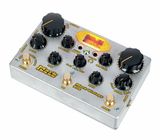
I find it a bit strange that the effects loop send is placed on the left side while the return is on top. Even more unusual is the routing: the loop is post-drive but pre-EQ, which means if I put a cab sim in the loop, the EQ still comes after it. I’ve never seen that before, though maybe I just haven’t looked closely at other designs. It works, but it feels counterintuitive.
That said, after spending time with the pedal and gathering feedback from other players, here’s a breakdown of the pros and cons of the Mark Vintage Pre:
Pros:
Solid clean tone – the preamp delivers a warm, articulate sound that works well in many contexts.
Useful tone controls – the 4-band EQ hits sensible frequency points, allowing precise shaping.
Drive with blend control – makes it easier to dial in grit without losing low-end clarity.
Headphone output & AUX-in – excellent for silent practice and direct monitoring.
Rugged build – road-ready construction with sturdy knobs and jacks.
Connectivity options – DI with transformer, digital outputs (RCA/Toslink), FX loop, and true bypass make it versatile for both live and studio use.
Compact “all-in-one” solution – great for players who want a portable rig without carrying an amp head.
Cons:
Unusual FX loop design – send on the side, return on top, and routing that is post-drive but pre-EQ feels unintuitive for some setups.
Drive/distortion quality – many users find it thin or fizzy compared to other preamp pedals.
EQ presets (Flat, Cut, Old) – considered limited and not dramatically different.
FX loop behavior – seems to work more like a parallel loop without a dry/wet mix, reducing flexibility.
Noise issues – noticeable hum when connected to ungrounded gear (like laptops or some audio interfaces).
Tube replacement – the 12AX7 is very hard to swap, and doing so risks damaging the board.
Digital outputs – useful in theory, but often redundant if you already have an audio interface.
Price-to-feature ratio – some features feel like gimmicks, making it expensive for what it delivers.
Conclusion
The Markbass Mark Vintage Pre is a versatile and powerful preamp pedal, delivering warm tube-driven tone, strong EQ shaping, and plenty of modern connectivity in a compact format. It’s especially useful for players who want a practice + performance solution with headphone out, AUX-in, and DI all in one box.
Still, the FX loop design quirks, average-sounding drive, and potential noise issues hold it back from being perfect. If you value portability and clean tube tone above all, it’s a strong option. But if you need flawless distortion, more intuitive routing, or maximum value for money, there are alternatives worth exploring.
That said, after spending time with the pedal and gathering feedback from other players, here’s a breakdown of the pros and cons of the Mark Vintage Pre:
Pros:
Solid clean tone – the preamp delivers a warm, articulate sound that works well in many contexts.
Useful tone controls – the 4-band EQ hits sensible frequency points, allowing precise shaping.
Drive with blend control – makes it easier to dial in grit without losing low-end clarity.
Headphone output & AUX-in – excellent for silent practice and direct monitoring.
Rugged build – road-ready construction with sturdy knobs and jacks.
Connectivity options – DI with transformer, digital outputs (RCA/Toslink), FX loop, and true bypass make it versatile for both live and studio use.
Compact “all-in-one” solution – great for players who want a portable rig without carrying an amp head.
Cons:
Unusual FX loop design – send on the side, return on top, and routing that is post-drive but pre-EQ feels unintuitive for some setups.
Drive/distortion quality – many users find it thin or fizzy compared to other preamp pedals.
EQ presets (Flat, Cut, Old) – considered limited and not dramatically different.
FX loop behavior – seems to work more like a parallel loop without a dry/wet mix, reducing flexibility.
Noise issues – noticeable hum when connected to ungrounded gear (like laptops or some audio interfaces).
Tube replacement – the 12AX7 is very hard to swap, and doing so risks damaging the board.
Digital outputs – useful in theory, but often redundant if you already have an audio interface.
Price-to-feature ratio – some features feel like gimmicks, making it expensive for what it delivers.
Conclusion
The Markbass Mark Vintage Pre is a versatile and powerful preamp pedal, delivering warm tube-driven tone, strong EQ shaping, and plenty of modern connectivity in a compact format. It’s especially useful for players who want a practice + performance solution with headphone out, AUX-in, and DI all in one box.
Still, the FX loop design quirks, average-sounding drive, and potential noise issues hold it back from being perfect. If you value portability and clean tube tone above all, it’s a strong option. But if you need flawless distortion, more intuitive routing, or maximum value for money, there are alternatives worth exploring.
1
0
Report
CW
Could be perfect with a few tweaks
I bought this looking for a good tube preamp for bass. I appreciate the flexibility of the EQ section, the flat/scooped/vintage tonal options, and the ease of use. I'm less keen on the slightly gimmicky implementation of the vacuum tube (it has an LED backlight, the filaments never really getting a glow), so it's hard to say how much impact it has on the drive sounds. Despite this, the two flavours of drive are quite good, and having a wet/dry mix to preserve some of the original signal is welcome.
Complaints are minor: FX send and return should really be on the same side of the enclosure, the oversized knobs are a bit comical to use, and the aforementioned 12AX7 tube feels like its tacked on. But these are minor complaints: it sounds great overall.
Complaints are minor: FX send and return should really be on the same side of the enclosure, the oversized knobs are a bit comical to use, and the aforementioned 12AX7 tube feels like its tacked on. But these are minor complaints: it sounds great overall.
0
0
Report