


KRK Kreate 5

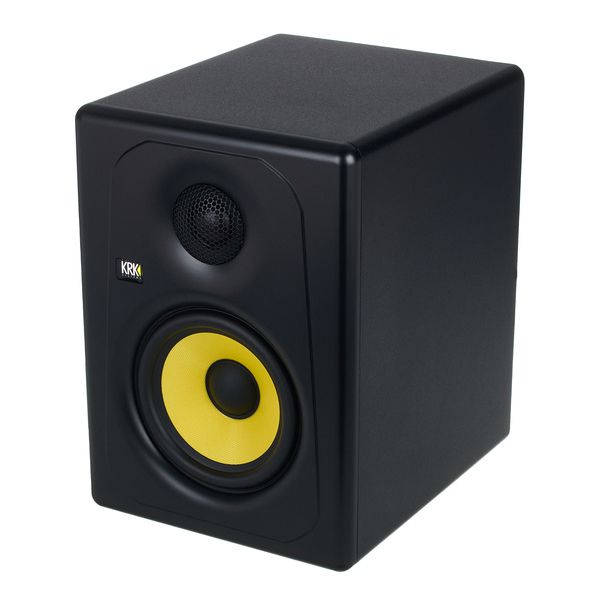
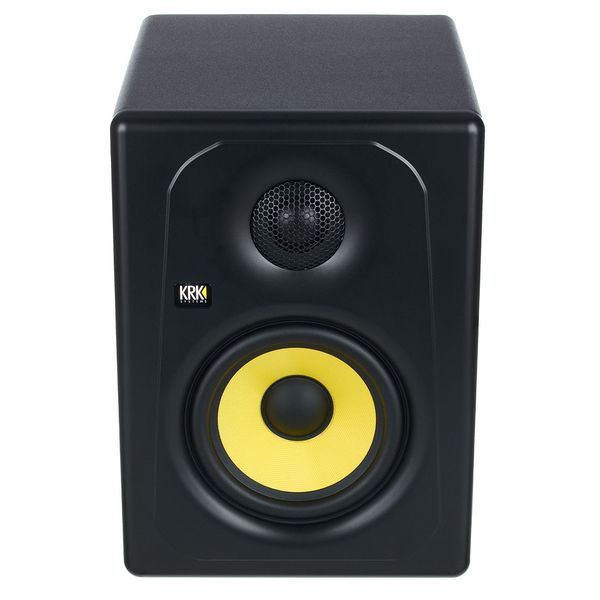
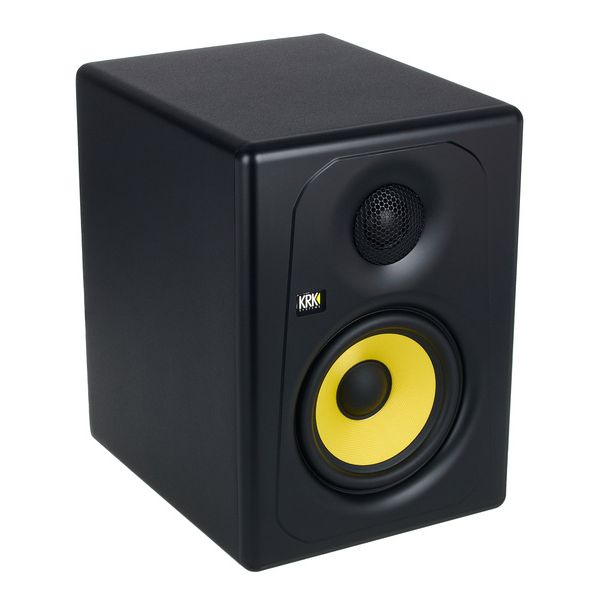
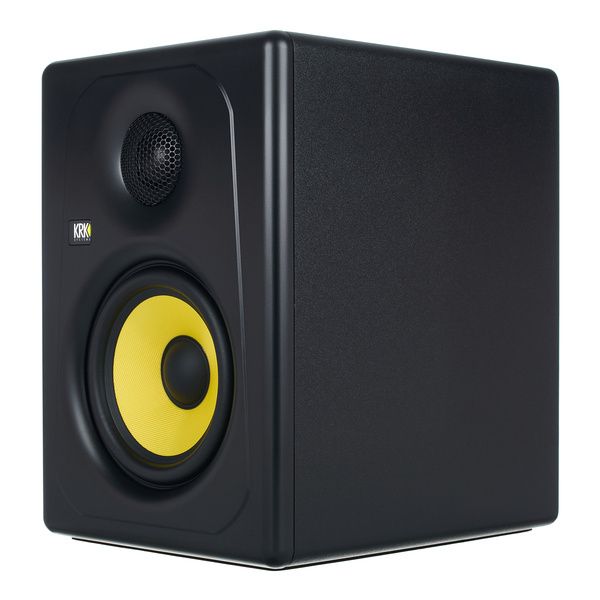
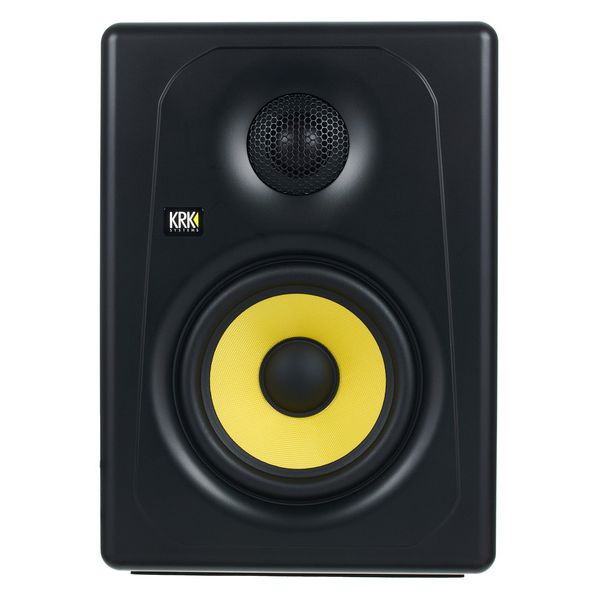
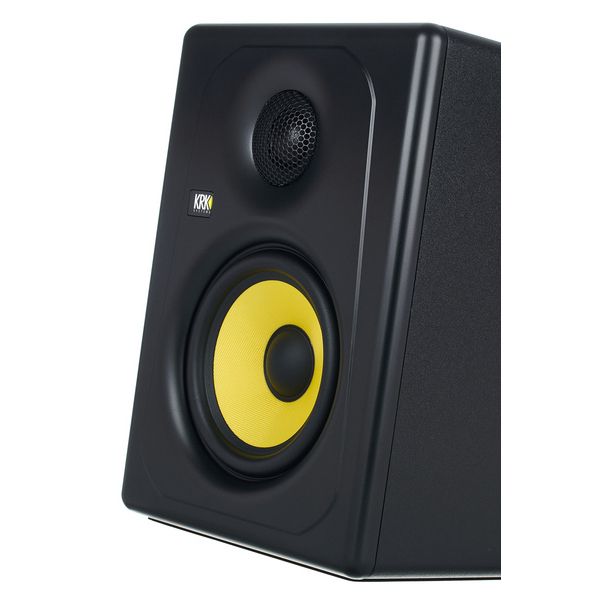
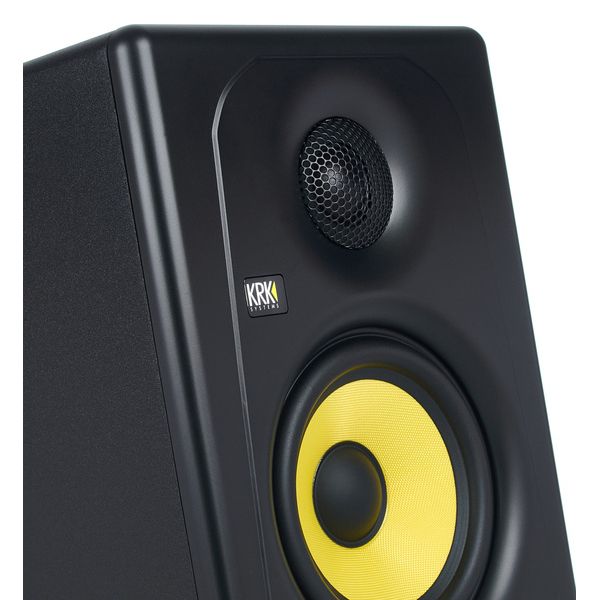
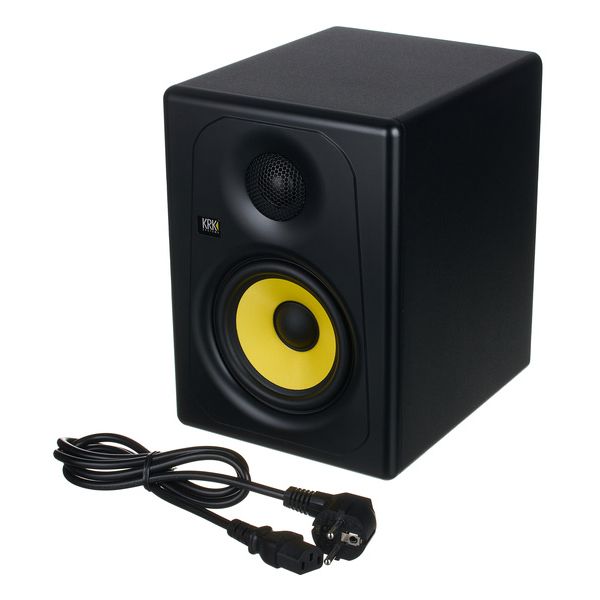


Active Nearfield Studio Monitor
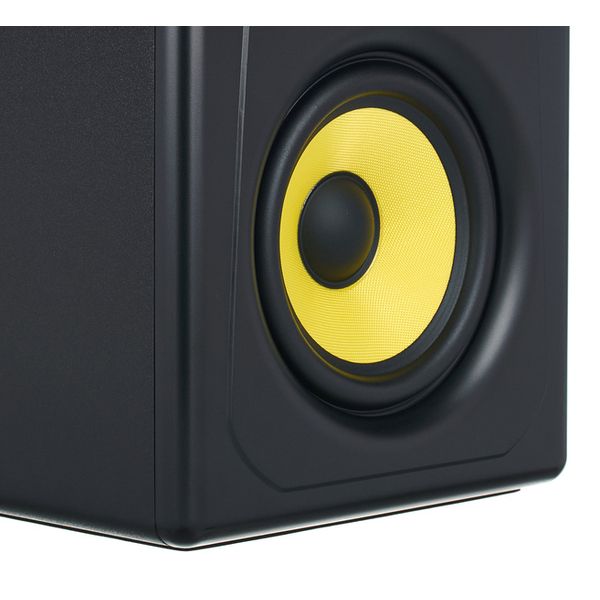
- Equipped with: 5" glass fibre aramid woofer, 1" fabric dome tweeter
- Power: 55 W
- Frequency range: 58 - 40.000 Hz
- max. SPL: 105 dB
- Class-D amplifier
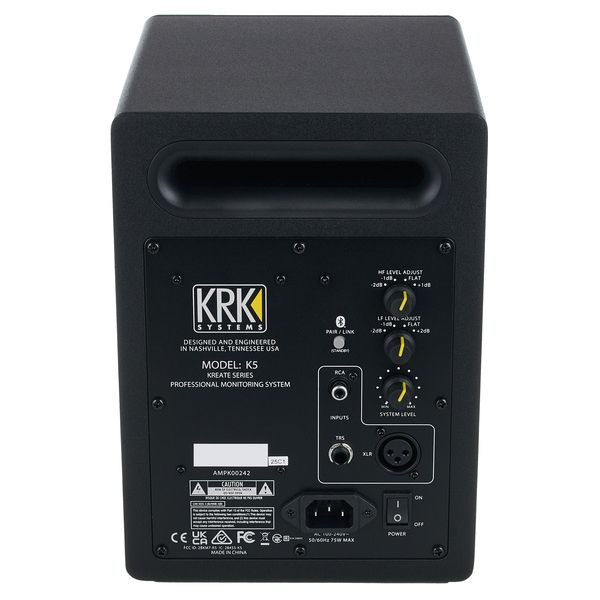
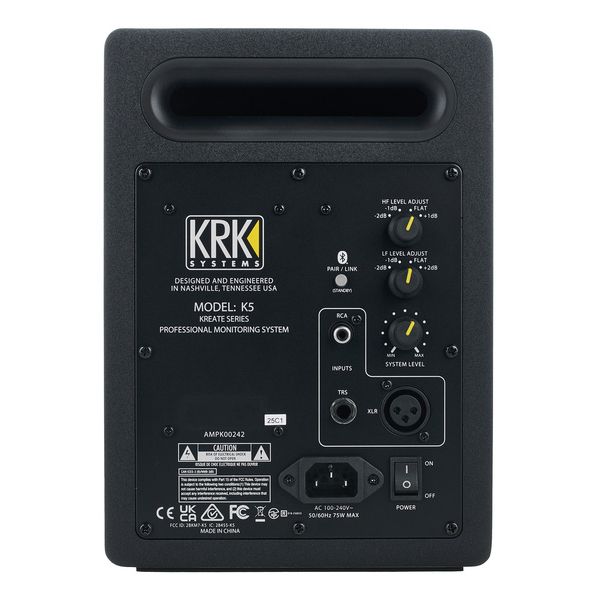
- Adjustable HF/LF
- Level control
- NF shelf filter
- Bluetooth Classic 5.3 TWS A2DP
- Line inputs: XLR, 6.3 mm jack balanced, RCA
- Housing material: PVC vinyl-coated MDF
- Dimensions (W x H x D): 185 x 259 x 229 mm
- Weight: 4.3 kg
-
Available since June 2025
-
Item number 603242
-
Sales Unit 1 piece(s)
-
Woofer Size Class 5"
-
Number of Ways 2
-
Speaker Housing - Woofer System Bass reflex
-
Coaxial System No
-
Power per Unit 55 W
-
Frequency range 58 Hz – 40000 Hz
-
Analogue XLR Input Yes
-
Analogue Input (Jack) Yes
-
Analogue Input (Mini Jack) No
-
Analogue Input (RCA) Yes
-
Digital input No
-
Manual Sound Adjustment Yes
-
DSP Room Correction none
-
Woofer 5"
-
Tweeter 1"
-
Height 259 mm
-
Width 185 mm
-
Depth 229 mm
-
Weight 5,22 kg
-

Yellow, loud, and deep
The KRK Kreate 5 are individually available, powerful two-way studio monitors equipped with Bluetooth connectivity and an integrated bass reflex port, featuring a 5" driver with a yellow composite cone made of glass fibre-reinforced aramid for low and midrange reproduction, paired with a 1" fabric dome tweeter that sits safely behind a perforated metal grille. The familiar KRK combination of low mass, high rigidity, and internal damping enables precise diaphragm movement, resulting in clear and controlled performance in the low and mid frequencies, which can be seen, among other aspects, in the favourable group delay times below 100Hz. The textile dome tweeter adds finely detailed high-frequency reproduction and helps create a wide, pronounced sweet spot at the listening position, making the monitors reliable tools for focused work.

)
Even the bats will hear it
The KRK Kreate 5 reaches high frequencies up to 40kHz, a range far beyond human hearing that nonetheless contributes to an exceptionally clean, precisely defined reproduction in the audible band up to roughly 21kHz. Its bass response extends down to 58Hz (±3dB), with the lowest usable frequency at a deep 46Hz, and the response remains notably linear below 100Hz, which is especially valuable in the challenging low-frequency region. The monitor relies on a bi-amping design that combines a 45W Class D amplifier for the woofer with a 15W Class A/B amplifier for the tweeter, delivering a maximum sound pressure level (SPL) of up to 105dB at full volume. A rear-mounted volume control completes the setup and allows quick adjustment within different working environments.
)
An affordable powerhouse
The KRK Kreate 5 will suit users seeking an affordable monitoring system that can handle music production and web content while also catering to casual music listening or film viewing, offering a sound calibration that supports analytical yet fatigue-free listening during prolonged sessions. Designed for near-field use, it performs best at distances of roughly one to one and a half metres, and two shelving filters allow gentle adaptation to room acoustics, with bass and treble adjustable by -1dB or -2dB, or raised by +1dB for a slightly brighter or fuller balance. Connection options include balanced XLR and 6.5mm TRS inputs alongside an unbalanced RCA input for HiFi components. The ability to stream audio wirelessly via Bluetooth adds a practical touch and integrates smoothly with smartphones or other Bluetooth-enabled devices.
)
About KRK
The KRK Systems brand, today a subsidiary of US guitar manufacturer Gibson, has existed since 1986, and has acquired as many years of experience in the construction and design of studio monitors. Today, KRK's product range has extended to include subwoofers and headphones, in addition to their near- and midfield monitors. KRK adepts include such illustrious names as Mark "Spike" Stent (Ed Sheeran’s sound engineer), Grammy winner Ed Cherney, rock producer Jacquire King, rock and metal producer Ulrich Wild as well as trance DJ Armin van Buuren.
For all types of studios
The KRK Kreate 5 provides versatile connectivity, making it easy to integrate into a wide range of production environments - be it as a reliable monitor in a home studio, at a video editing station, as a powerful desk speaker, or as part of a multi-channel home cinema system. While the Kreate 5 already delivers impressive low-frequency performance, users working with electronic music or other bass-heavy material may benefit from adding a subwoofer, which not only relieves the monitors in the lower range but also adds a significant downward expansion to the overall reproduction range. For a full stereo setup, we recommend using a pair of these speakers.
In the spotlight
Group delay
In acoustics, "group delay" refers to the time offset with which specific frequency components pass through a system such as a studio monitor, describing in milliseconds how much a given range lags behind and serves as an indicator of the system's temporal precision. In the low-frequency region, a high group delay of more than about 20ms below 100Hz can cause reproduction to feel blurred or slightly muddy, as bass elements no longer align cleanly with the rest of the signal. Ideally, group delay should remain low and as even as possible across the spectrum so that all parts of a signal reach the listener at virtually the same moment, preserving a clear and well-defined overall sound.
)
This is what customers who viewed this product bought
Accessories & matching items



Compare options
-
KRK Active Nearfield Monitors at a glance
-
Display Active Nearfield Monitors from £ 100 - £ 140
-
Go to product group Active Nearfield Monitors
-
Go to product group Studio Monitors
-
Go to product group Studio and Recording Equipment
-
Show manufacturer details for KRK
-
KRK Studio and Recording Equipment at a glance