


Bad Cat Ocelot Lunchbox Head B-Stock

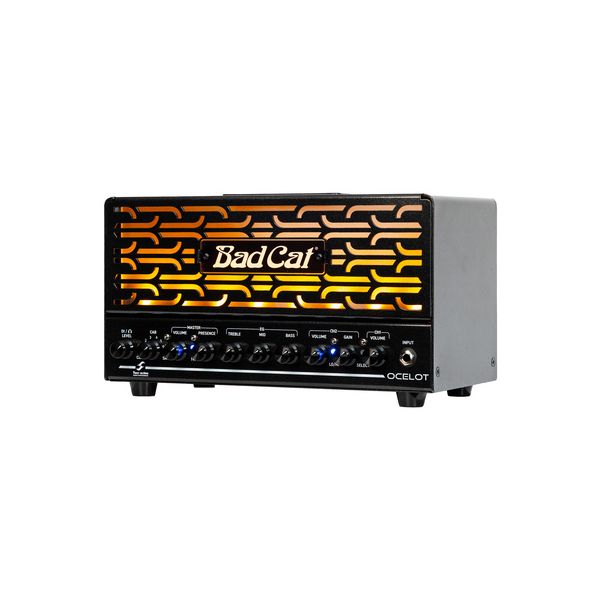
Tube Amplifier Head for Electric Guitar
- Compact, lightweight lunchbox amplifier
- Ideal for stage, studio or silent practice at home
- Six integrated Bad Cat DynIR cab simulations (with Two Notes Torpedo technology)
- Output: 20 W, with switchable 1 W mode
- Pre-amp tubes: 3 x 12AX7
- Power amp tubes: 2 x EL84
- Two channels (Controls for Channel 1: Volume; Controls for Channel 2: Gain, Volume, Lo/Hi Gain switch
- Controls for three-band EQ (bass, mid, treble), Presence, Master Volume, DI/headphone level
- Switches for the six cab sims, 1 W mode, ground/lift
- Loudspeaker outputs: 2 x 1/4" jack (switchable between 8 and 16 ohms)
- Input: 1/4" jack
- FX Send/Return: 2 x 1/4" jack
- Headphone out: 1/4" stereo jack
- DynIR cab sim output: XLR
- MIDI input: 5-pin DIN
- Footswitch connection: 1/4" stereo jack
- USB-C
- Dimensions (W x D x H): 46 x 25 x 28 cm
- Weight: 7.5 kg
- Includes 2-way footswitch
-
Available since September 2025
-
Item number 626123
-
Sales Unit 1 piece(s)
Classic tubes, modern features
The Bad Cat Ocelot lunchbox head combines the classic sound of genuine tubes with some very modern recording features. Despite its compact dimensions of 46 x 25 x 28cm and a weight of just 7.5kg, the Ocelot is a fully fledged tube guitar head with two channels and a dual EL84 power section that delivers up to 20 watts. Alternatively, the amp can be switched to a 1W mode, which also makes it ideal for smaller studios or just practising at home. Another standout feature is the built‑in Two Notes Torpedo technology, with six Bad Cat DynIR cab simulations. This means the Ocelot can be used together with a speaker cabinet, but also fed directly into a recording interface or mixing console via the XLR output. The Bad Cat Ocelot is a successful blend of traditional tube amp tone with a playability and compatibility that makes it incredibly flexible.

)
Two channels and enhanced connectivity
Inside the Bad Cat Ocelot's compact lunchbox enclosure, three 12AX7 preamp tubes and two EL84 power tubes deliver a typically British‑flavoured character. Channel 1 covers clean and crunch tones, while Channel 2 offers significantly more overdrive thanks to its gain and volume controls. A three-band EQ helps shape the tone, complemented by a presence dial for the power amp and a master volume control. For recording or direct‑in setups, the Ocelot also features a six‑way Cab Sim selector that can switch between different Bad Cat DynIR speaker simulations. The amp is equally flexible in connectivity terms: It boasts two speaker outputs for 8 or 16-ohm cabs, a serial FX loop, MIDI in, and a headphone output. The DynIR XLR output provides direct access to the cab sims, while USB‑C allows seamless integration with the Torpedo Remote software used for editing the sims.
)
Dial in that tone and rock out
The Bad Cat Ocelot is likely to appeal first and foremost to guitarists who appreciate the direct character of a tube amp but don't want to miss out on modern features. Used as a traditional tube amp, the Ocelot is simply connected to a guitar cabinet, exactly one would expect from a guitar head. At the same time, the built‑in cab simulation also allows guitarists to feed their sound directly into a recording interface or mixing desk, which can be very practical in the studio, where musicians can dial in authentic guitar tones without the need for an additional load box or external speaker simulation. Despite this technology, the Ocelot's layout is pleasantly straightforward. Set the controls and dial in the desired sound, start playing – there's really not much more to it. This no‑nonsense approach is likely to find favour among the many guitarists who prefer to shape their tone directly on the amp.
)
About Bad Cat
Bad Cat is a boutique manufacturer of guitar amplifiers, founded in the late 1990s and based in California. The brand quickly made a name for itself with hand‑built all‑valve amps that are valued for their dynamic and detailed sound and rugged and robust construction. At the core of the Bad Cat design philosophy is the blend of classic circuit concepts with modern approaches, using only carefully selected components. Bad Cat amps are crafted meticulously by hand, and are aimed primarily at discerning guitarists who know what they want when it comes to expressiveness and sound quality. Models such as the Black Cat, Hot Cat, and Cub are among the manufacturer's best‑known series, with a solid reputation on the boutique amp scene.
Growl on stage, purr in the studio
In practice, the Bad Cat Ocelot is an extremely versatile animal. On stage, it can be run with a standard guitar cabinet – while the XLR output simultaneously sends a DI signal with cab simulation to the mixing desk. In the studio, the Ocelot can be used completely without a speaker – instead, it's played and recorded via the DynIR output or the headphone connection. The 1W mode also enables tube saturation at moderate volumes, which is particularly helpful when practising or jamming at home, and the Bad Cat Ocelot ships with a two‑button footswitch for quick channel switching. The result is a setup with a boutique sound and build quality that can be used very flexibly anywhere from the living room to the studio and the stage – and all without complex cabling or additional equipment.
In the spotlight
Two Notes Torpedo Remote
Bad Cat's speaker simulations are edited using the Torpedo Remote software suite from Two Notes Audio Engineering, which runs on Mac and Windows. Users simply need to hook up the Ocelot to a computer via USB‑C. The integrated DynIR cabinets can then be edited in detail: Selecting microphone types, adjusting their position in front of the speaker, or blending multiple microphones together. Different speaker cabinets can also be loaded and saved as presets. This is particularly practical for recording setups, as the sound of the speaker simulation can be adjusted very precisely without ever having to place actual microphones in front of an actual cabinet. At the same time, the interface is easy to navigate, allowing musicians and producers to quickly find the right sound for each track.
)

Compare options
-
Bad Cat Tube Guitar Heads at a glance
-
Display Tube Guitar Heads from £ 1000 - £ 1500
-
Go to product group Tube Guitar Heads
-
Go to product group Electric Guitar Amp Heads
-
Go to product group Electric Guitar Amps
-
Go to product group Guitars and Basses
-
Show manufacturer details for Bad Cat
-
Bad Cat Guitars and Basses at a glance