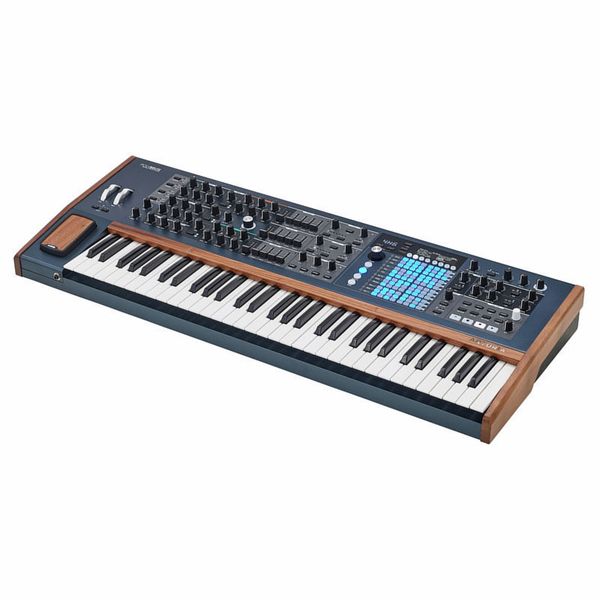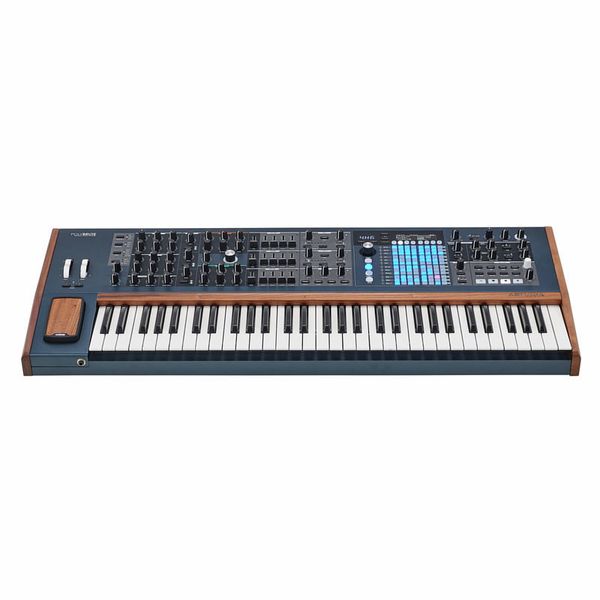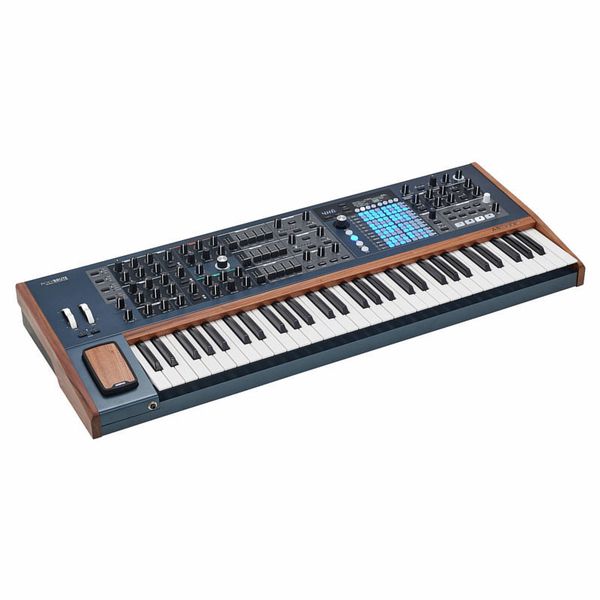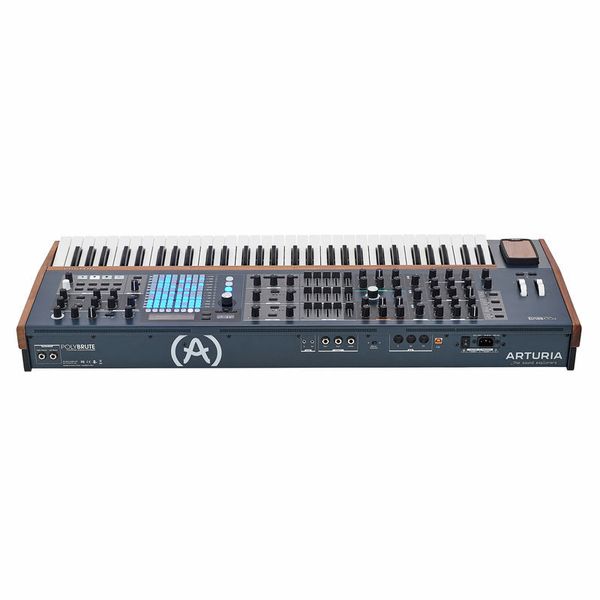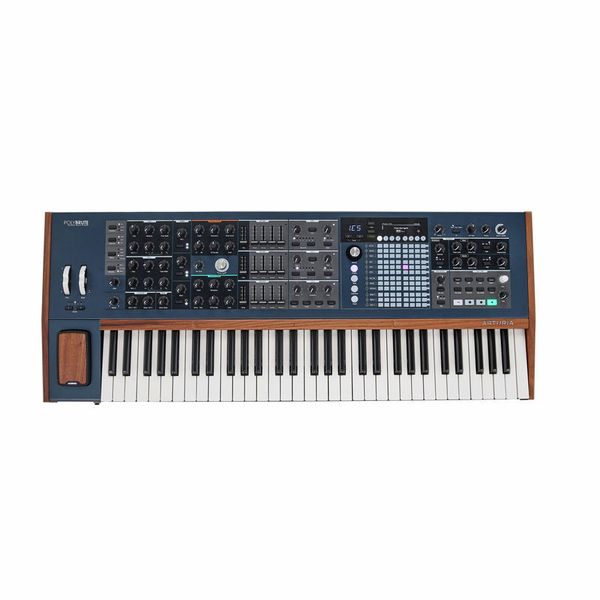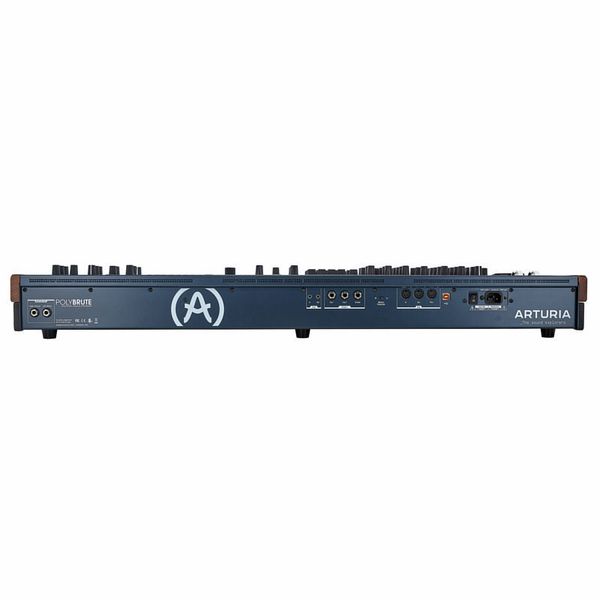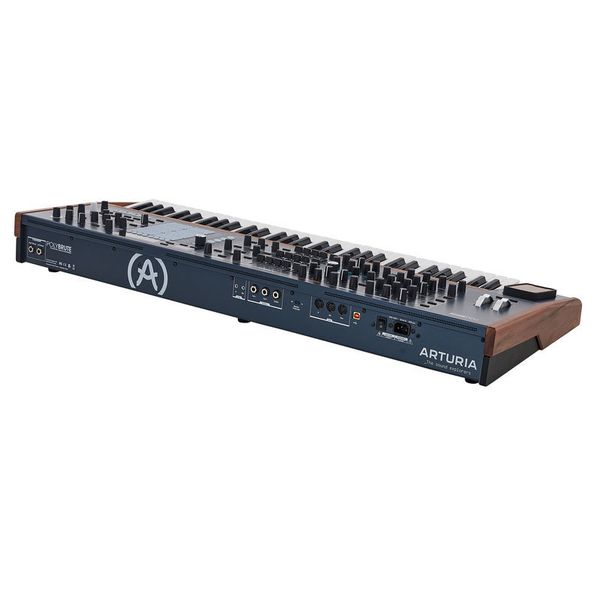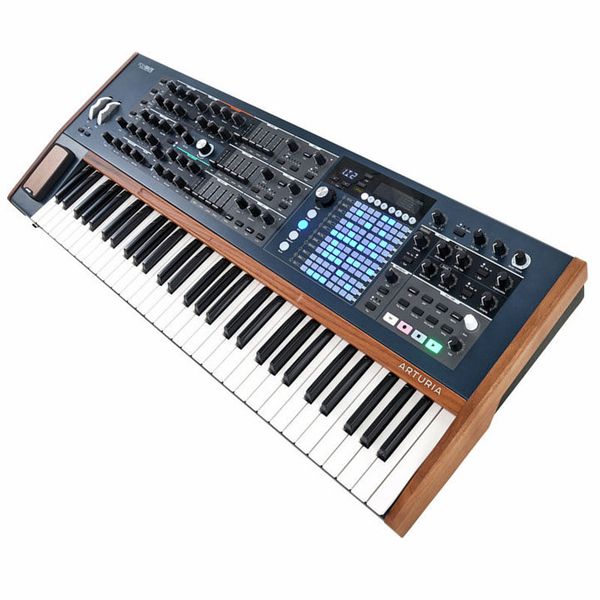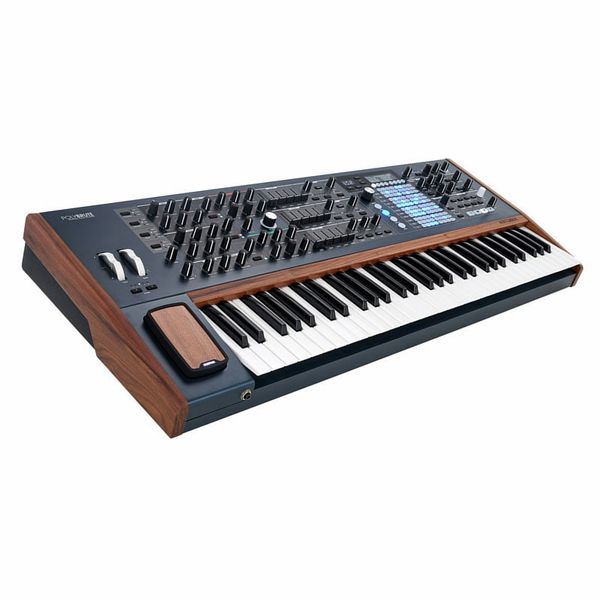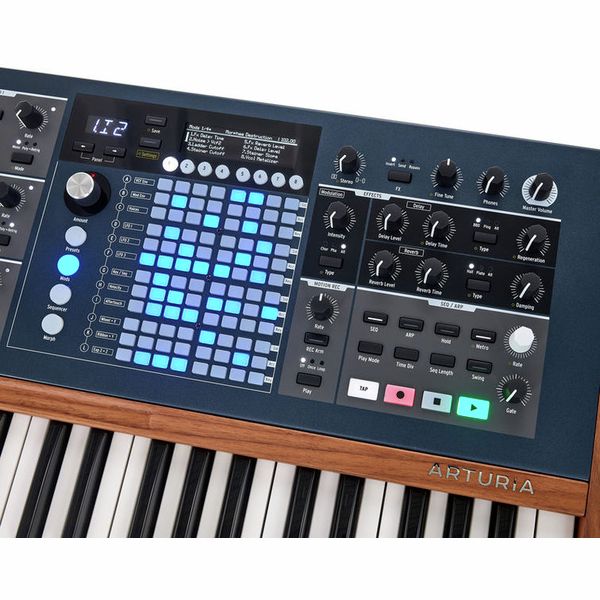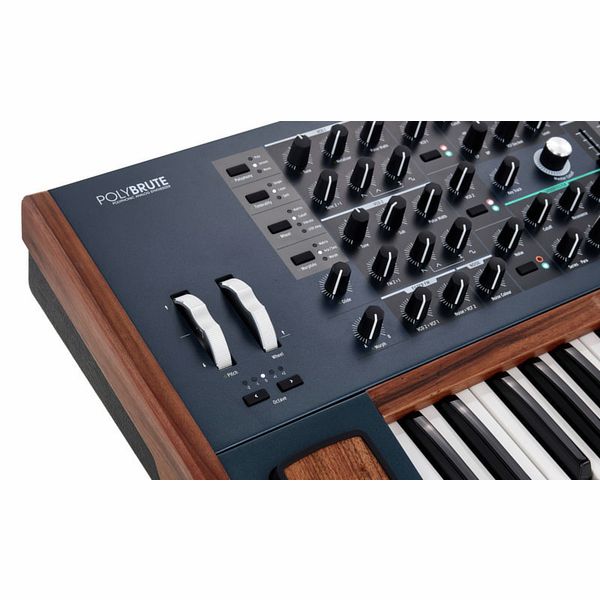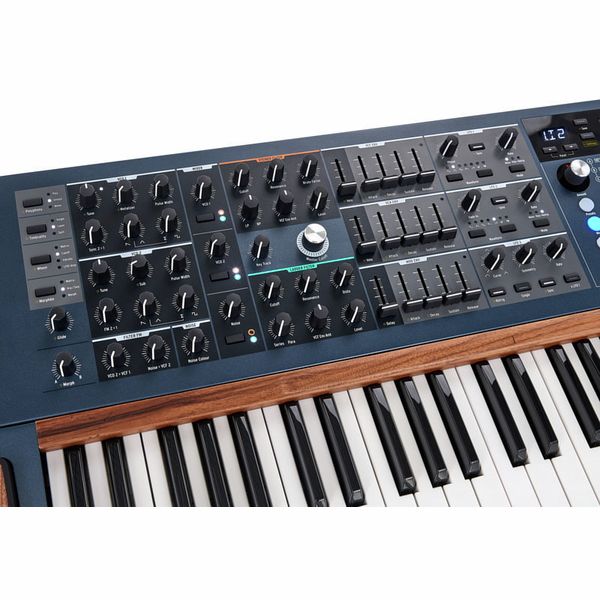
The Arturia PolyBrute is a powerful polyphonic synth, designed to fill out and round off the French keyboard manufacturer's Brute series. Its sound engine is a best-of compilation of the existing Brute models, although of course its features and parameters have been adapted for polyphonic sounds. The PolyBrute combines analogue synthesis, digital effects, and extensive controller options in a keyboard that's built for expressive live performance. Musicians can create entirely new sounds quickly and precisely using the clear, generously outfitted control panel – and then dramatically transform them as they play, thanks to the new morphing function. The Arturia PolyBrute can also be integrated seamlessly into a DAW-based studio with its sequencer, arpeggiator, and syncable LFOs: This is where this powerful synth can really show off the strengths of its flexible sound engine and comprehensive control layout.
The Arturia PolyBrute isn't a copy of a legendary instrument from the '70s or '80s: This synth is the one its successors will be based on. Each voice has two VCOs, with features like the proprietary Metalizer and Hard Sync functions – alongside a linear FM and a sub-oscillator – delivering a varied, highly modulatable spectrum. The filter section, combining a 12dB multimode filter with a 24dB ladder low-pass, can go seamlessly from smooth to aggressive, thanks to the adjustable drive settings and Arturia's unique Brute Factor. Loopable envelopes, syncable LFOs, and multiple performance controls enable rich, dynamic modulation. Another standout feature of the Brute ecosystem is the Morphing function, which can completely transform parameters or even entire presets with a single dial – a near-infinite playground. The onboard sequencer can create polyphonic patterns and automate parameters, while note sequences from the arpeggiator can be copied into the sequencer for further editing.
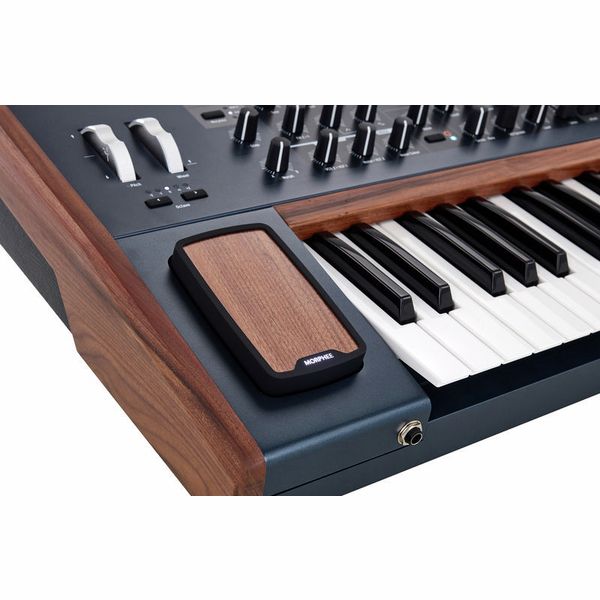
The Arturia PolyBrute is a synth for keyboard players who want more than just preset playback. With the freely assignable 3D Morphée controller, the two-and-a-half octave ribbon controller, the Morphing function, and a range of connectable pedals, musicians can conduct their own orchestra of sounds with genuine expression. Thanks to its flexible sound engine, the PolyBrute's six voices deliver pads and chords that cover a wider spectrum than conventional synths. Users can also define splits – for example, bass and chords – for practical live presets, adding layers for even more complex textures. This intricate architecture is unusual for an analogue synth, making the PolyBrute ideal for ambitious sound designers: They can program their pads, chords, leads, basses, and FX with real nuance and individual character with its extensive modulation options.
Arturia's success story began with software emulations of well-known analogue synthesizers such as the Moog Minimoog, Sequential Prophet-5, and Oberheim SEM. The popular software instruments included in the V Collection are still flagship products of the French developer today. Over time, Arturia has gradually expanded its range and now also offers a host of hardware devices, ranging from synthesizers and keyboard controllers to sequencers. Since then, the former software developer has thus also become a household name in the world of analogue synthesizers and other equipment.
The Arturia PolyBrute is ideal as stage keyboard in a live setup, thanks to its distinctive sound and performance capabilities – what's more, keyboardists won't need much in the way of extra gear. Perhaps its six voices aren't quite enough to cover an entire set, but for those moments where keyboard players want to show off their full range of skills, it'll deliver some of the most powerful and flexible polyphonic sounds out there. In the studio, where users can connect their PolyBrute to a DAW via USB, its syncable arpeggiator and sequencer will make it easy for producers to compose patterns made up of tracks for both notes and modulation that run in parallel with the DAW. For even more complex modulation functions, the PolyBrute's sound parameters can be automated with the use of MIDI controllers.