


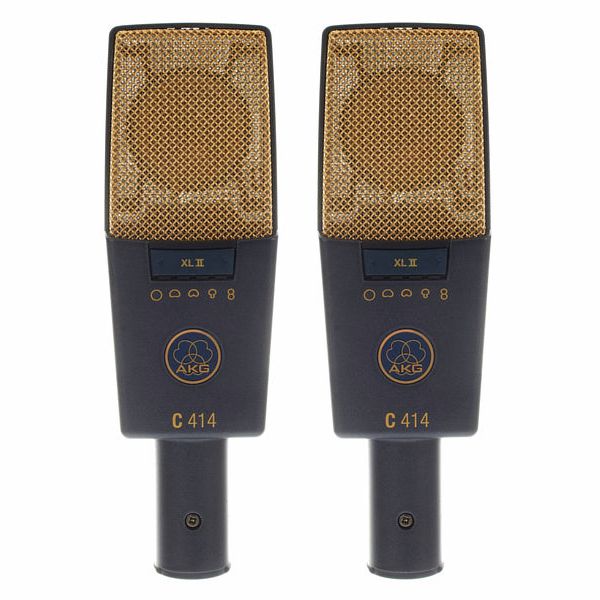
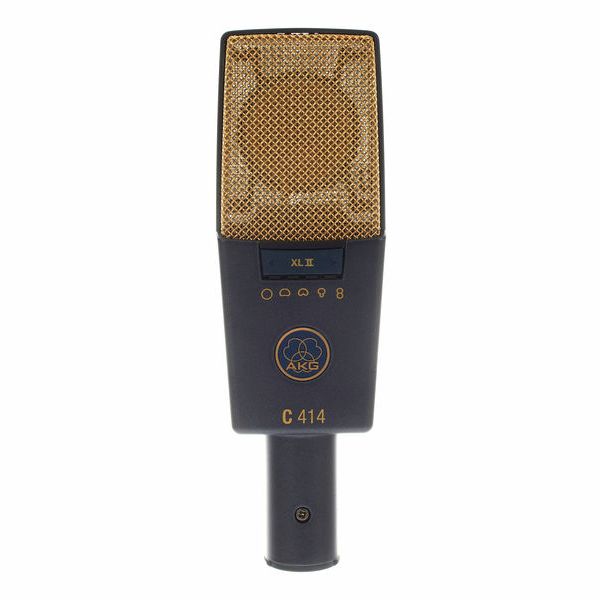
AKG C414 XLII Stereo Set

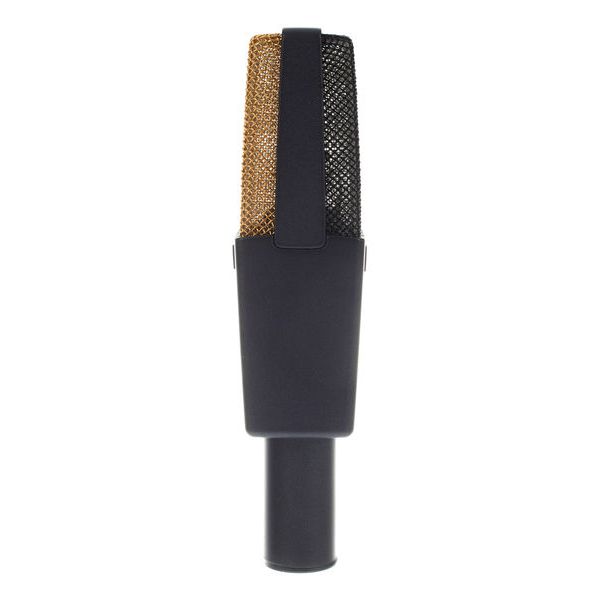
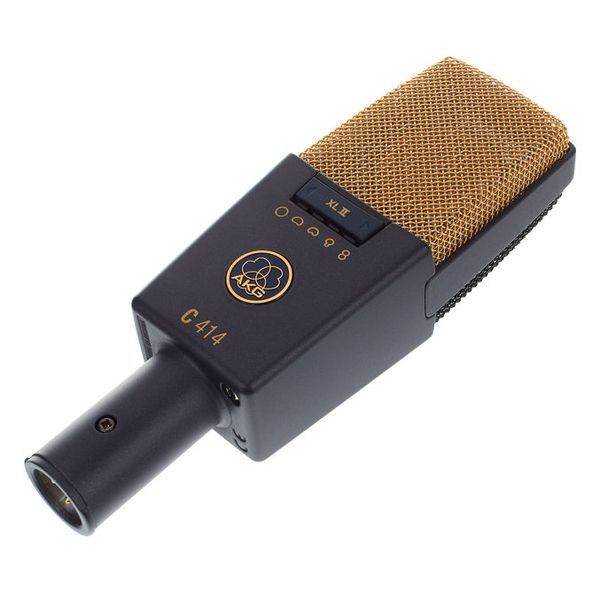
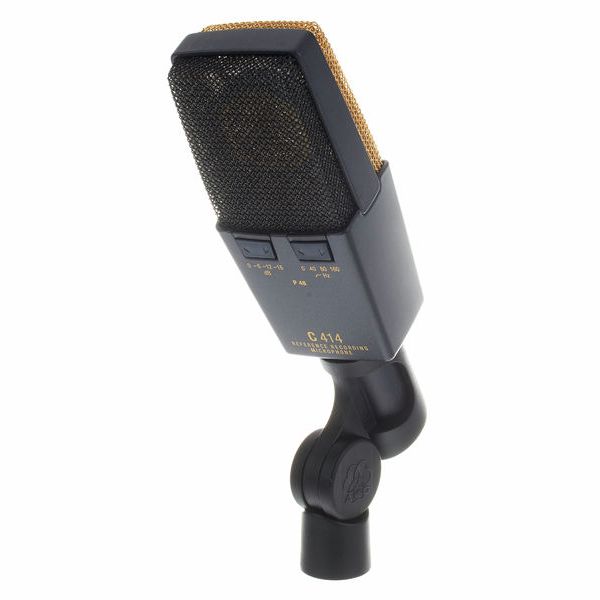
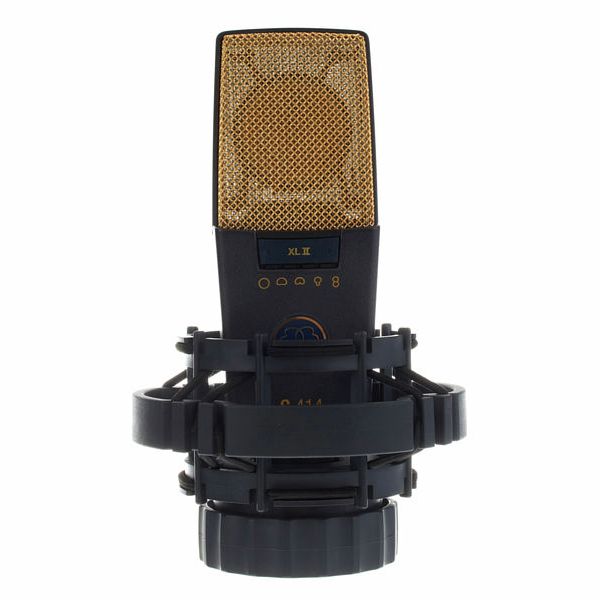
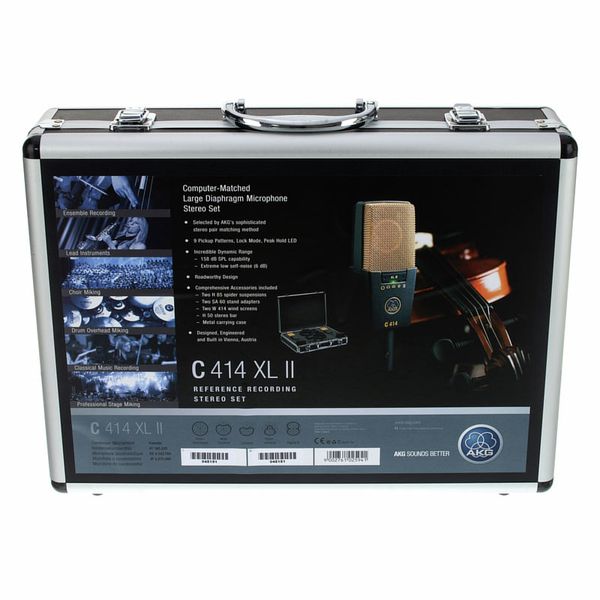


Large-diaphragm condenser microphone
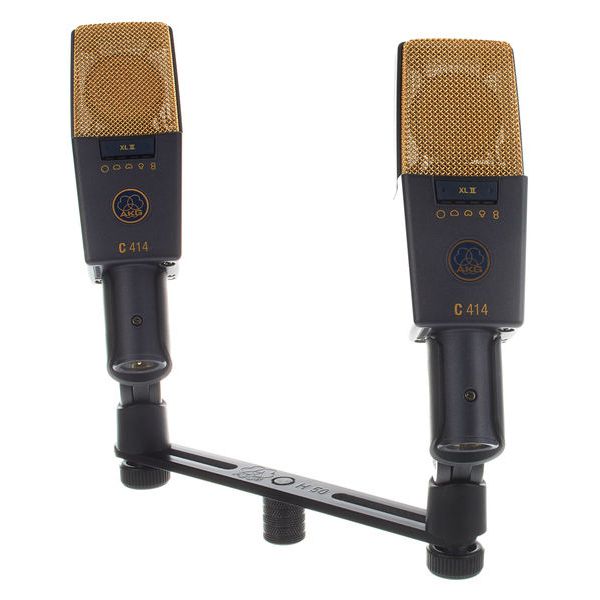
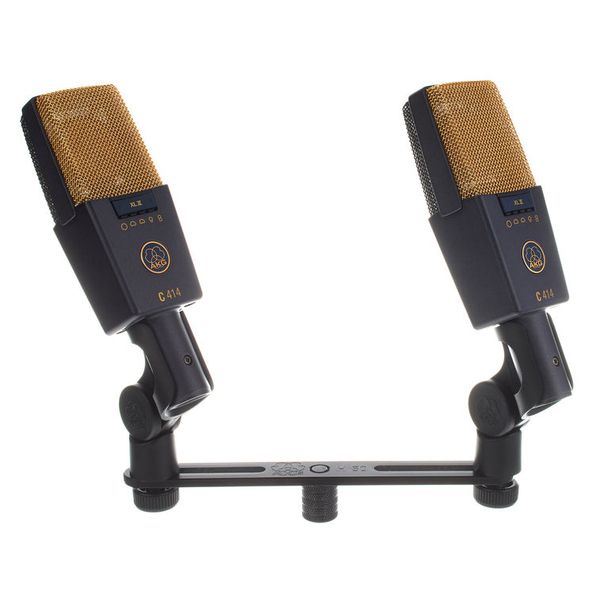
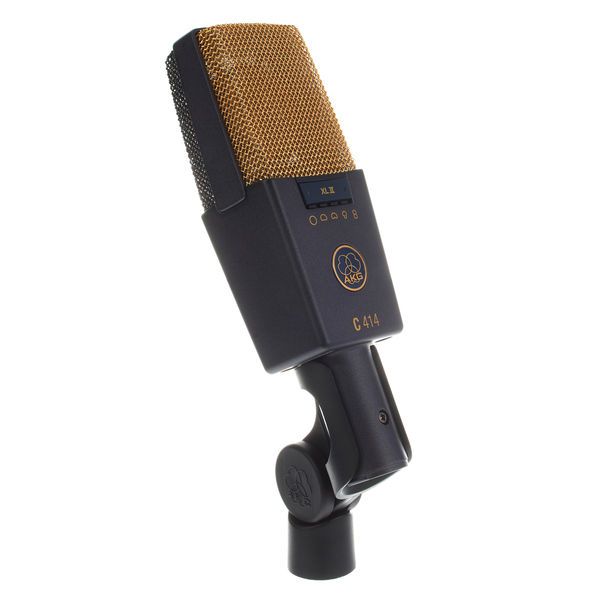
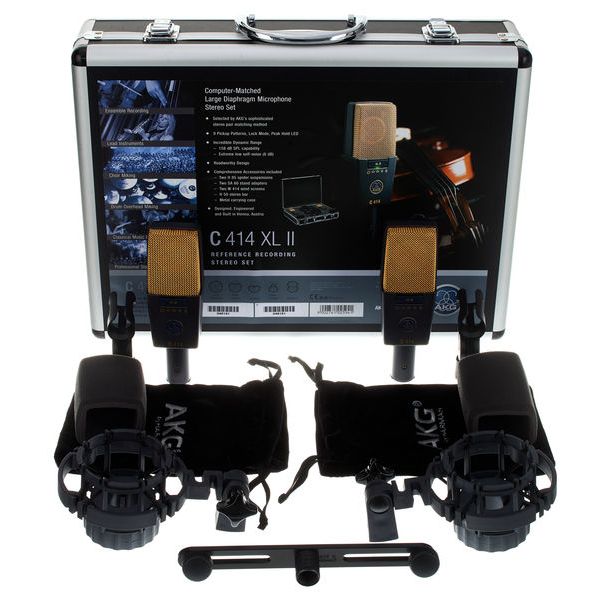
Stereo set consisting of two matched large-diaphragm condenser microphones
- Successor to the C414B-TLII
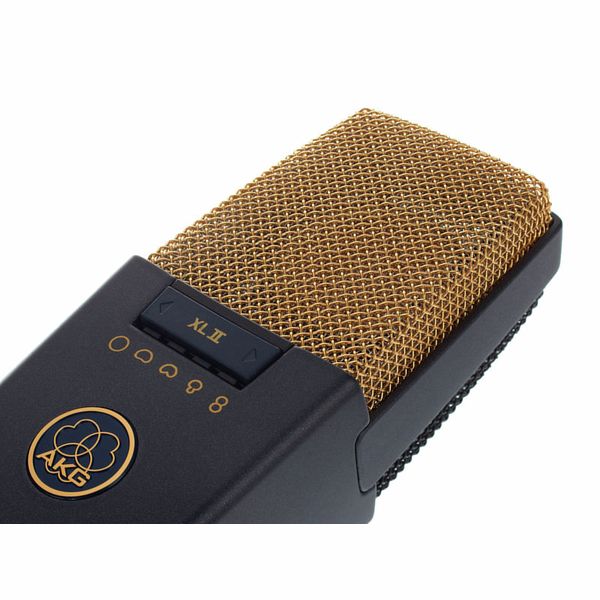
- Now with 9 switchable directional characteristics (cardioid, wide-cardioid, hypercardioid, omnidirectional, figure-8 + 4 intermediate positions)
- Frequency range: 20 – 20,000 Hz
- Dynamic range: 140 dB(SPL) max
- Slight treble boost from 4kHz
- Lock mode to save the settings
- Peak-Hold display
- Status LEDs
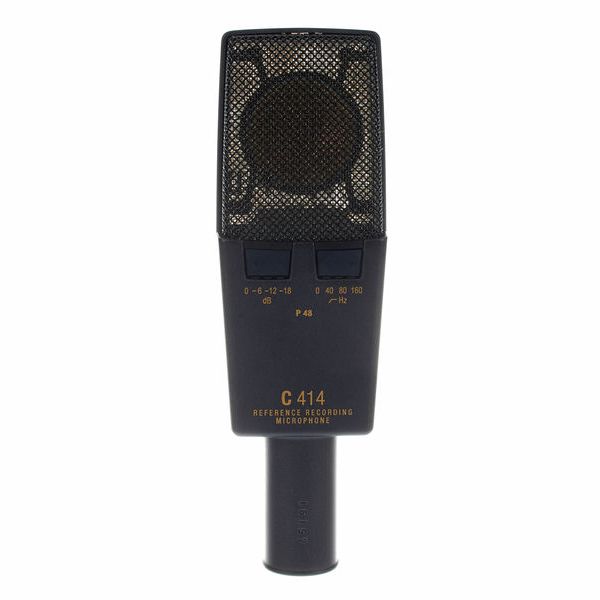
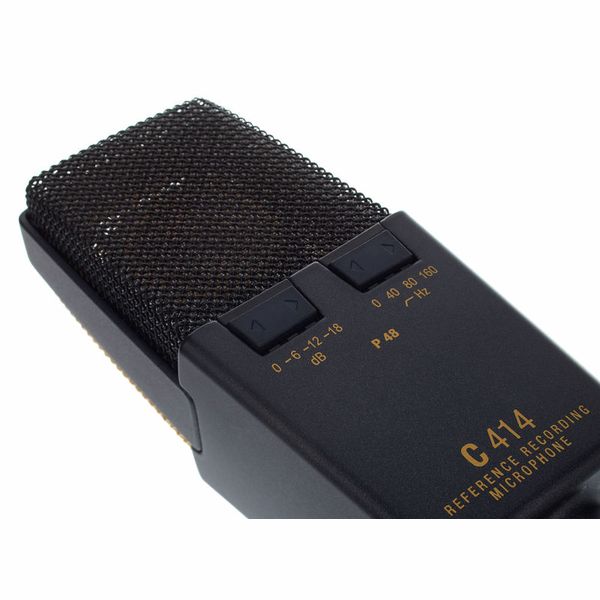
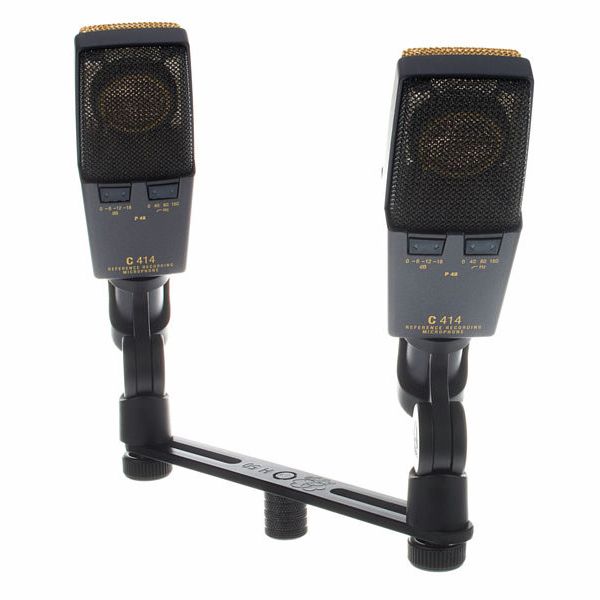
- 3-way switchable low-cut filter (40, 80, 160 Hz)
- 3 preattenuation pads (-6, -12, -18 dB)
- Microphone capsule: CK12
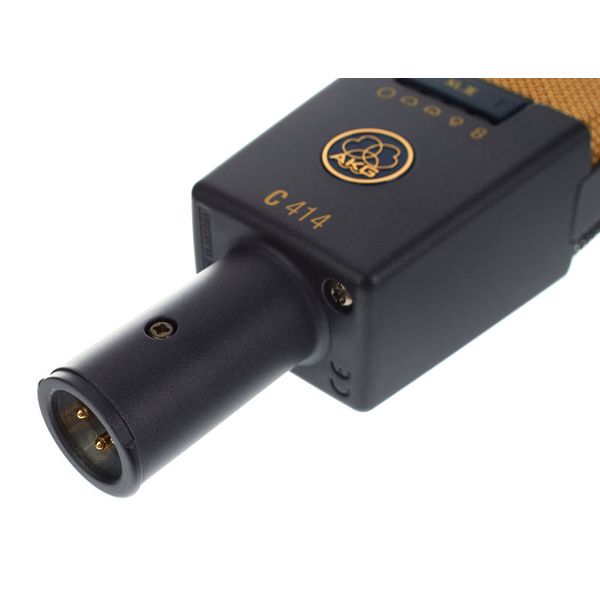
- Transformerless XLR output (FET)
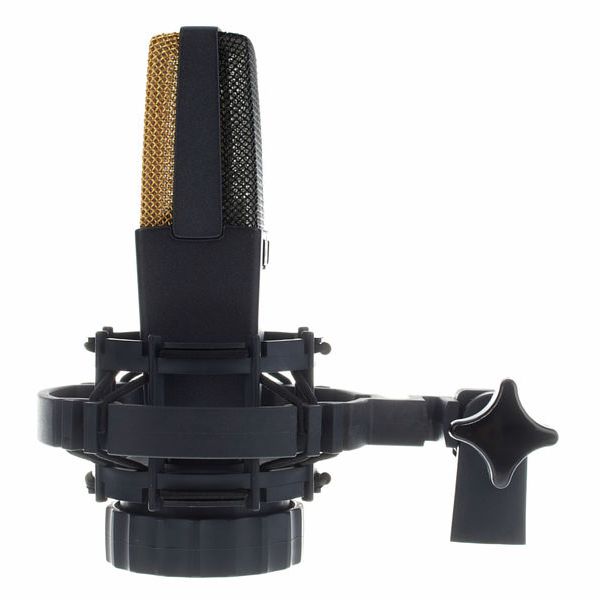
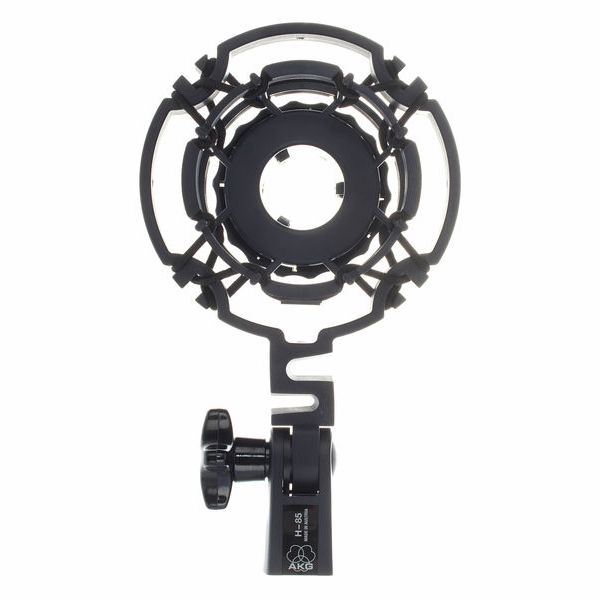
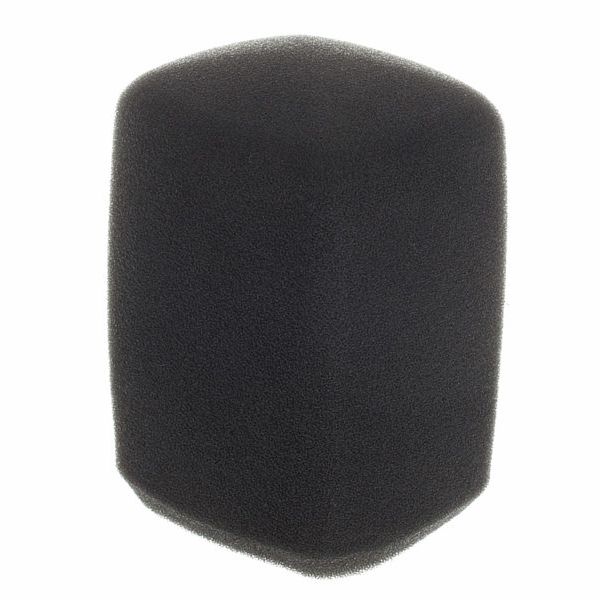
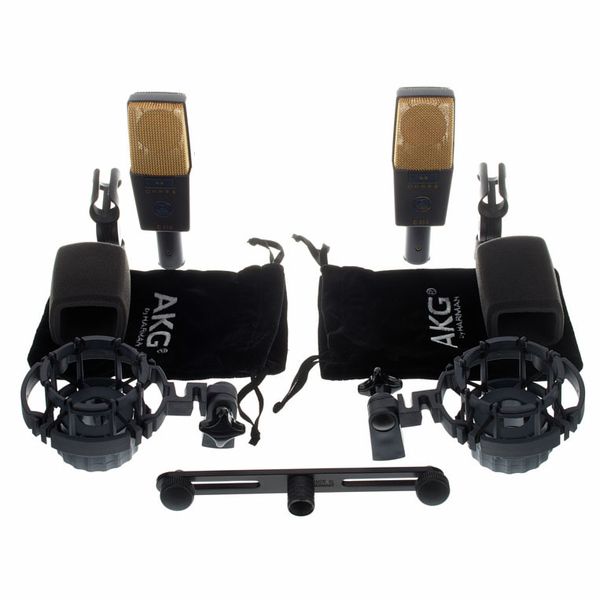
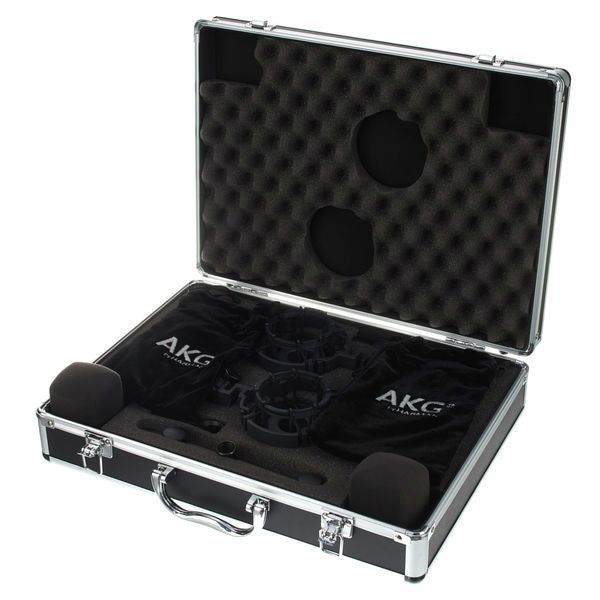
- Includes 2 elastic shock mounts (H85), 2 windscreens (W414X), 2 stand adapters (SA60), a stereo bar (H50), and an aluminium case
-
Available since February 2010
-
Item number 240603
-
Sales Unit 1 piece(s)
-
Tube No
-
Switchable Polar Pattern Yes
-
Omnidirectional Yes
-
Cardioid Yes
-
Figure-8 Yes
-
Low Cut Yes
-
Pad Yes
-
shockmount included Yes
-
USB Microphone No

The latest edition of a vintage classic
One of the main reasons for buying an AKG C414 XLII is simply that it is an AKG C414. The highly versatile C414, of which the XLII here is the latest incarnation, was launched in 1971 and has since become an industry standard – it's the "desert island" microphone for countless sound engineers. With nine different polar patterns, this large-diaphragm condenser microphone can capture any source in any setting. Moreover, the AKG C414 XLII is currently available as a matched stereo pair at a surprisingly low price tag that belies the mic's exceptional quality and reputation.
)
A whole host of recording options
Unlike the lower-priced XLS, the AKG C414 XLII is based on the original C414 design, which has a slight presence boost and a subtle brightness that is particularly flattering on vocals. Both models provide a myriad of options for use in a wide variety of recording situations, however. The C414 XLII's nine polar patterns range from omnidirectional to figure-of-eight and everything in between, and users can also activate one of three bass roll-offs (at 40Hz, 80Hz, and 160Hz, respectively) and three attenuation pads (at 6dB, 12dB, and 18dB). It has a lock mode to prevent unintentional changes to the control settings, as well as several status LEDs which display information on current settings and, if necessary, any overload peaks. AKG also hasn't skimped on the accessories here – each mic comes with its own elastic shock mount, stand adapter, and windscreen, and there's also a stereo bar for attaching both mics to one stand, as well as a very robust aluminium case to keep it all in.
)
Genuinely versatile
The AKG C414 XLII is a good fit for any music creators who are looking for a large-diaphragm condenser microphone that can be used in any situation. The integrated transducer delivers high-quality results with almost every conceivable source, such as the recording of vocals, piano, acoustic and electric guitars, or wind instruments, and performs exceptionally well in terms of dynamics and impulse fidelity. With its high sound pressure tolerance of up to 158dB SPL (when the pad is activated), the AKG C414 XLII is also perfect on loud, close-miked sources such as snare drums.
)
About AKG
AKG was founded in Vienna, in 1947, by Dr. Rudolf Goerike and Ernst Pless. After only a few months, the first AKG microphones were already being used for the first time in radio stations and theatres. AKG's big breakthrough occurred during the early 1950s, with some very sophisticated innovations that were unique in their field. One example is the D12, the first large-diaphragm condenser microphone with remote-controlled, switchable polar patterns – the first client to acquire them was the BBC in London. AKG is today a world-renowned brand in many different fields. With countless high-class products in its range, such as the well-known C414, the name AKG has always been synonymous with quality and outstanding sound.
A classic choice for studio or stage
Thanks to its sturdy construction, the AKG C414 XLII is not only an excellent choice for use in the studio, but also for the rigours of live performance. Despite its versatility, the C414 is still most at home in front of trumpets, saxophones, acoustic guitars, and, better still, in stereo miking setups. A stereo pair like this is also frequently used for recording grand pianos and as an overhead on drums; as mentioned above, they'd also perform extremely well as individual close mics on drums, where they're often placed under the resonant head.
)
