


Moog Grandmother

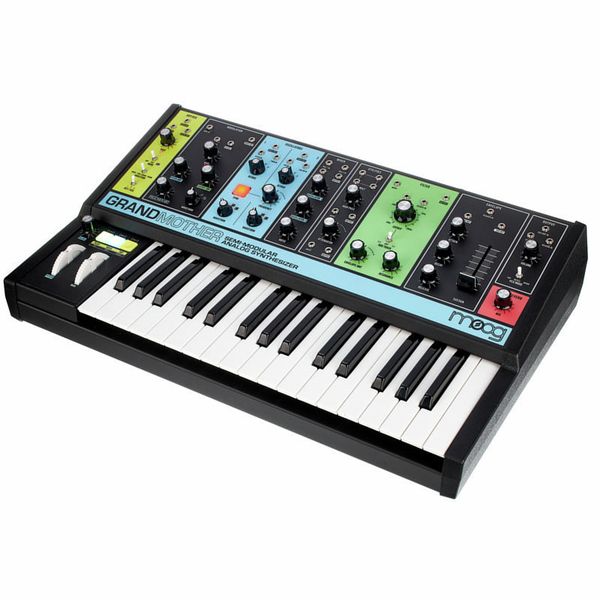
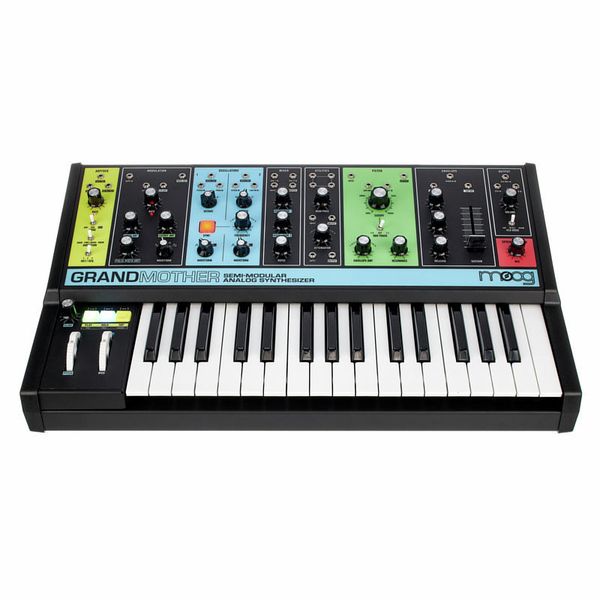
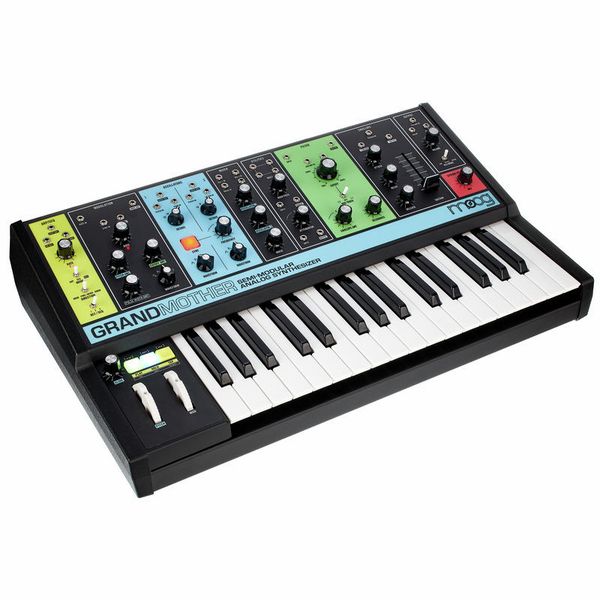
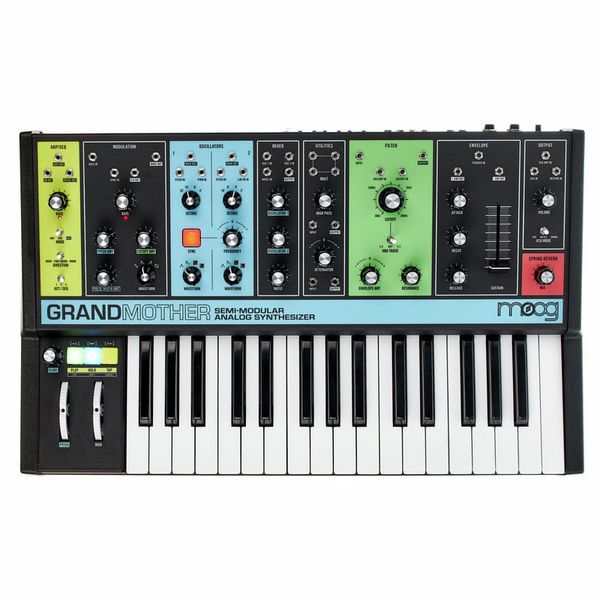
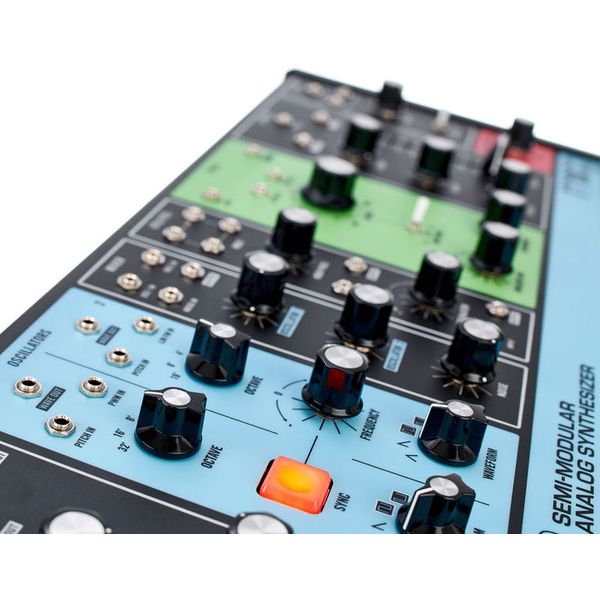
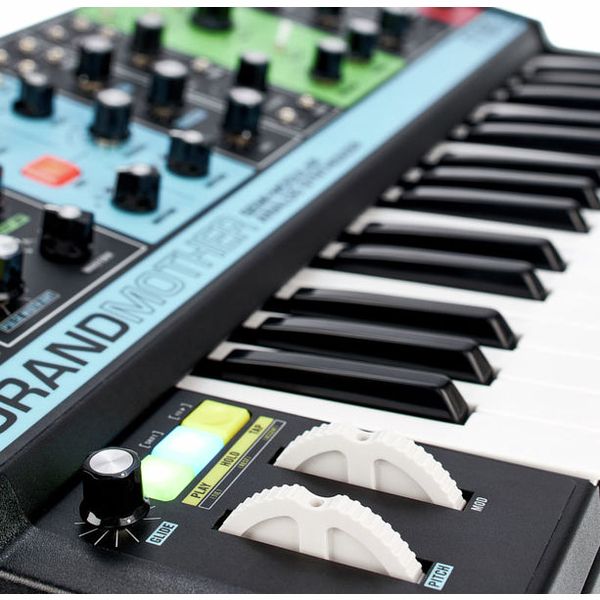
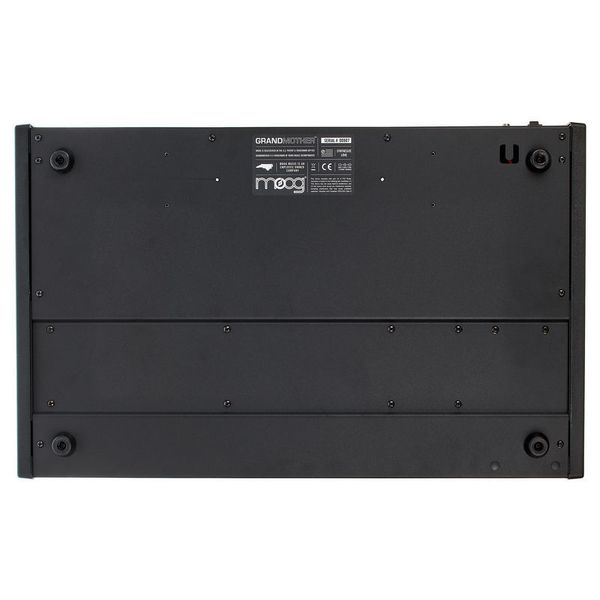
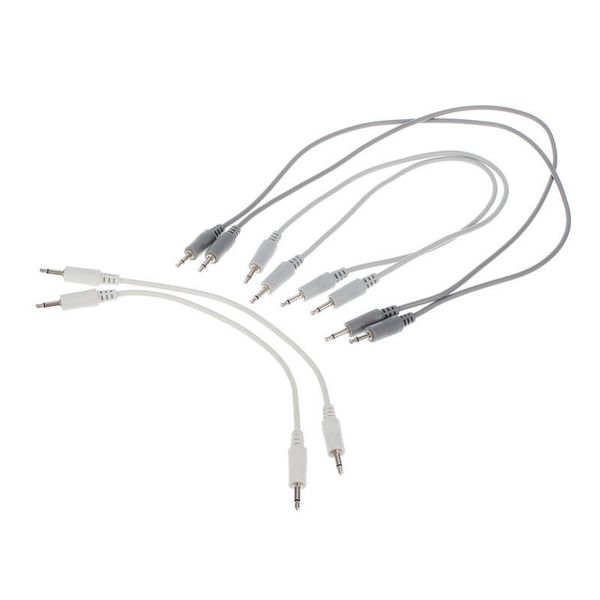


Semi-Modular Analogue Synthesizer
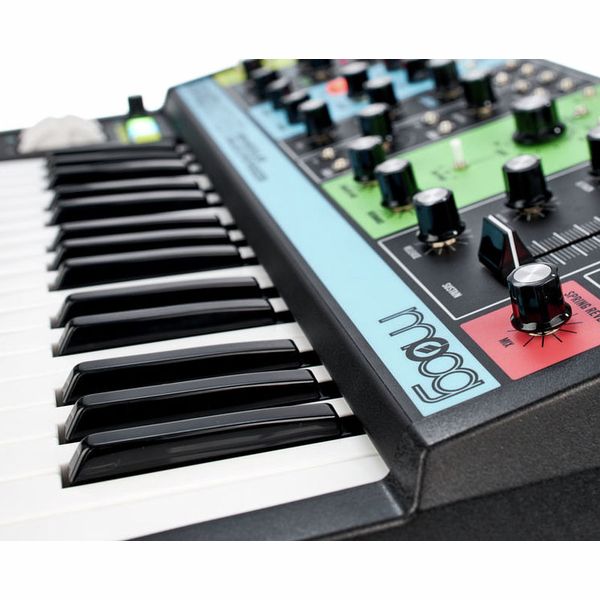
- 32-key Fatar Keyboard
- Saves up to 3 sequences with up to 256 notes
- Arpeggiator
- Integrated hardware spring reverb based on Moog 905 (can also be used for external signals)
- 2 analogue oscillators with selectable waveform and hard sync
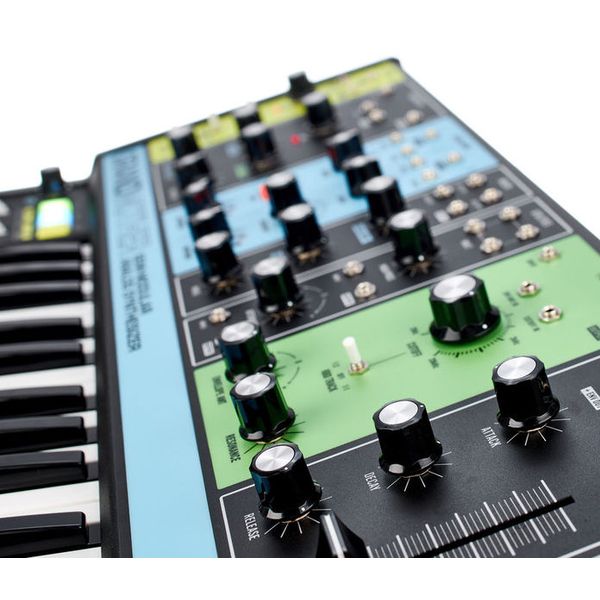
- Classic 4-pole 10 Hz - 20 kHz ladder filter
- Patchable 1-pole high pass filter
- Analogue ADSR envelope generator
- Patchable bipolar attenuator
- Compatible with Mother-32, DFAM and other modular systems
- Pitch and modulation wheel
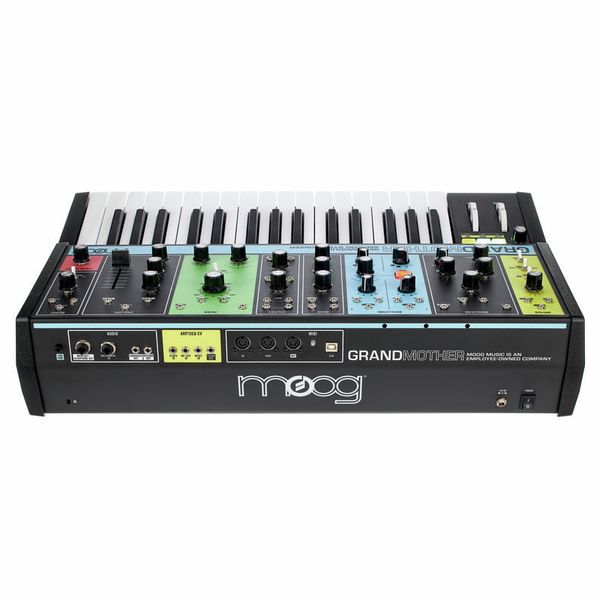
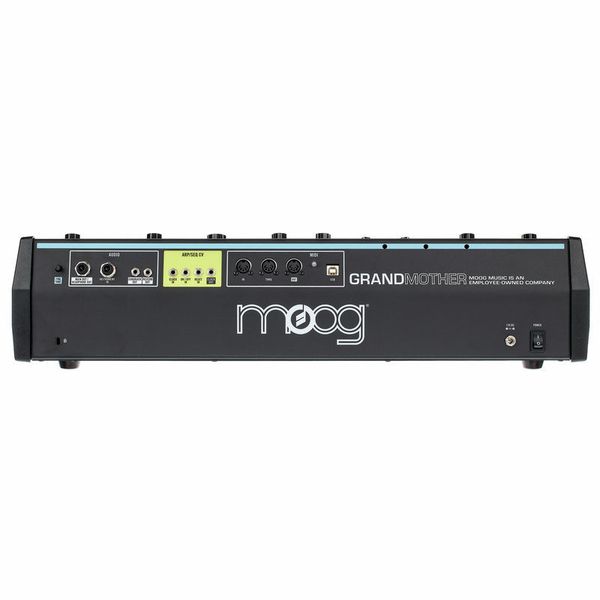
- 41 patch points with 21 inputs, 16 outputs and a parallel wired 4-jack Mult
- 1 Line input 6.3 mm jack unbalanced
- 1 combined line / headphone output 6.3 mm jack
- MIDI In / Out / Thru, USB
- Dimensions (W x D x H): 58 x 36.2 x 13.9 cm
- Weight: 7.25 kg
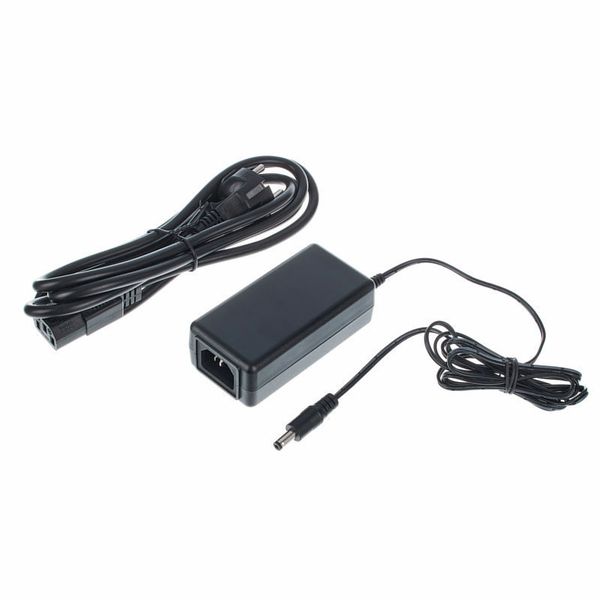
- Includes 12 V power supply (100 - 240 V)
- Suitable case: Article Nr. 496295 or Article Nr. 512190 (not included)
-
Available since July 2018
-
Item number 439985
-
Sales Unit 1 piece(s)
-
Number Of Keys 32
-
Touch-Sensitive Yes
-
Aftertouch No
-
Split Zones No
-
Modulation Wheel Yes
-
Number of simultaneous Voices 1
-
Sound Engine Analogue
-
MIDI interface 1x In, 1x Out, 1x Thru
-
Storage Medium None
-
USB-port Yes
-
Effects Spring Reverb
-
Arpeggiator Yes
-
Number of Analog Outputs 1
-
Digital Output No
-
Display No
-
Pedal Connections None
-
Dimensions 580 x 362 x 139 mm
-
Weight 7,3 kg
-


What you see is what you get
The Moog Grandmother is a semi-modular synth with a nice retro touch. In this case, semi-modular means that the Grandmother has 41 patch points, but can also be played without plugging in any external gear. The system is also compatible with other (semi-)modular Moog products and other modular synthesizers. Like many aspects of the design, the two analogue oscillators and the classic ladder filter are based on the old Moog modular systems. The whole thing is housed in one of Moog's typically solid and very attractive casings, with a high-quality 32-key Fatar keyboard. There are no digital flourishes on the Grandmother, nor any presets: What you see is what you get.

)
Grandmother's new tricks
In addition to the oscillators and filters already mentioned, the Moog Grandmother has a spring tank, which fits the optical retro touch and provides wonderful spring reverb if required. However, the Grandmother also has a few modern features on board. Besides the five-pin MIDI connections, there is also a USB connection on the rear side. On the front, Moog has provided an arpeggiator and a sequencer, which with 256 steps offers more than enough space for any melody, no matter how complex. As you would expect from a modularly designed device, it also contains the classic utilities such as a signal splitter (mult) and an attenuator, which helps with amplifying or attenuating the control signal.
)
Analogue purist, no digital frills
One thing should be clear: Like every Moog, the Grandmother's sound is simply sublime. If you buy a Moog, you get the Moog sound and if you want the Moog sound, you buy a Moog. It's as simple as that. That said, the Grandmother is no Swiss army knife – it's an analogue purist, no digital frills. Whether it's being used as an auxiliary device by a bassist, as a control centre for modular enthusiasts, or just to make the walls shake with synth sounds: Thanks to its well thought-out interface and ease of connection, the Grandmother will soon have hearts beating faster.
)
About Moog
The US manufacturer of synthesizers, based in Asheville, North Carolina, is one of the pioneers in this field and has legendary status. Robert Moog had been involved with electronic sound generation since the 1950s and his first experience was with the manufacture of theremins. The breakthrough came in 1968 with the Grammy-winning album "Switched-On Bach" by musician Wendy Carlos (then know as Walter Carlos), recorded in multitrack with a mono synthesizer. The Minimoog, released in 1971, became the most popular synthesizer of the 1970s and is still considered the benchmark for the quality of synthesised sounds. It and the following devices, like the Memorymoog, Polymoog, and Prodigy, shaped the sound of numerous albums, from Stevie Wonder to The Police and from Saga to Kraftwerk.
Grandmother's sound lab
The Grandmother's sound generation section has two oscillators, a filter, an ADSR, and an LFO on board – that's it. However, the Grandmother's real strengths lie in experimention, with the 41 patch points inviting musicans and producers to really get cooking. Especially in connection with a modular synthesizer, even an unusually creative musician is unlikely to reach their limits, since almost every module of the Grandmother can be accessed at any point. It's also a great companion for the Moog Mother-32, for example, and all this at a price that really is impressive.
)
