


Korg microKORG S

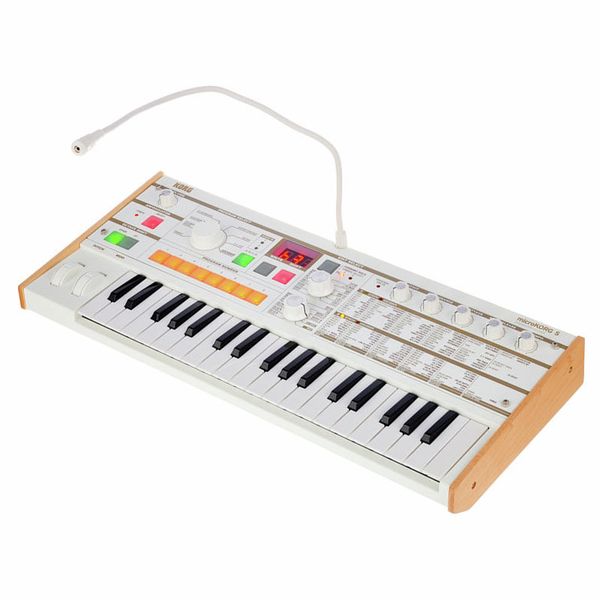
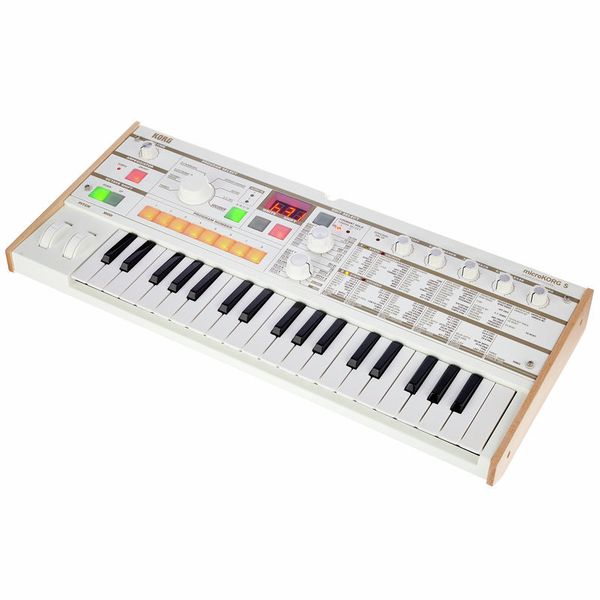
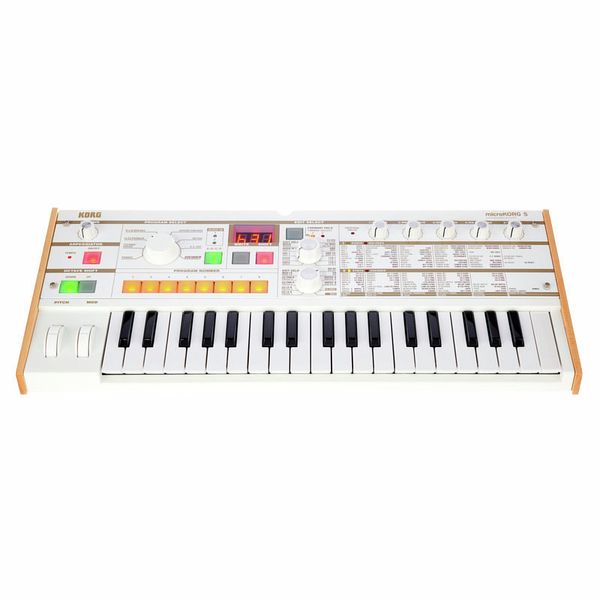
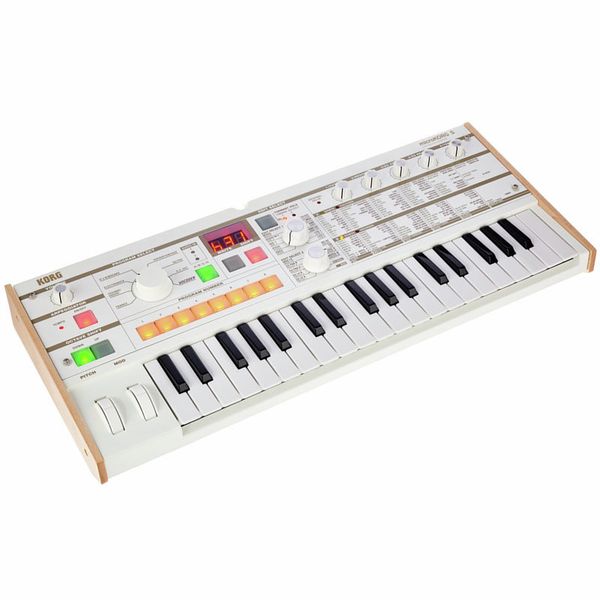
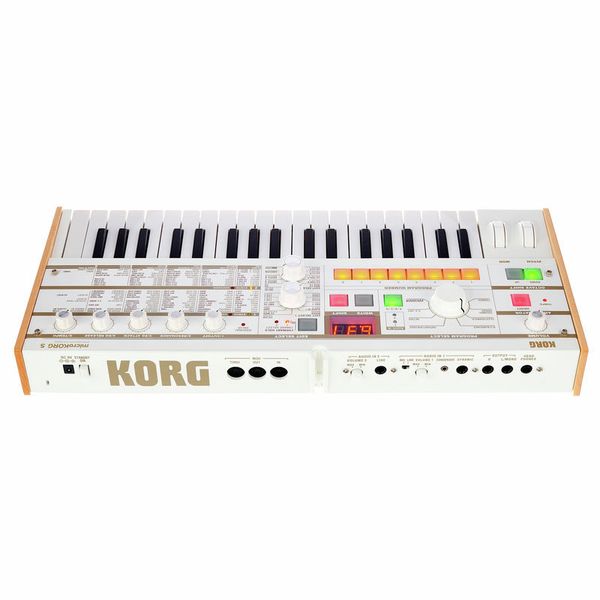
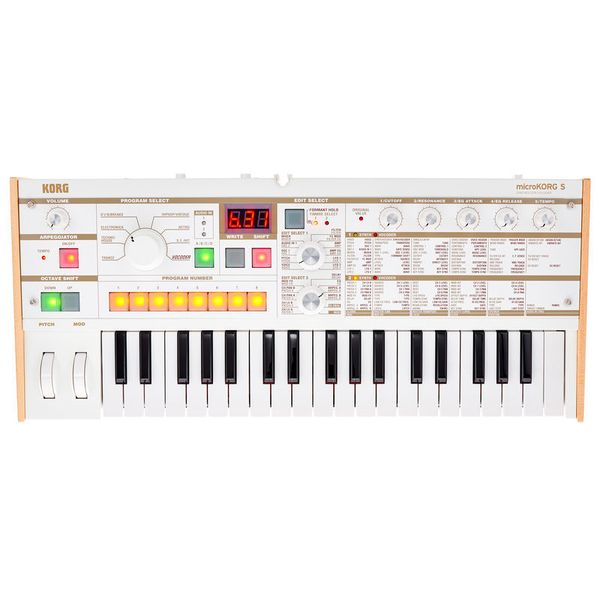
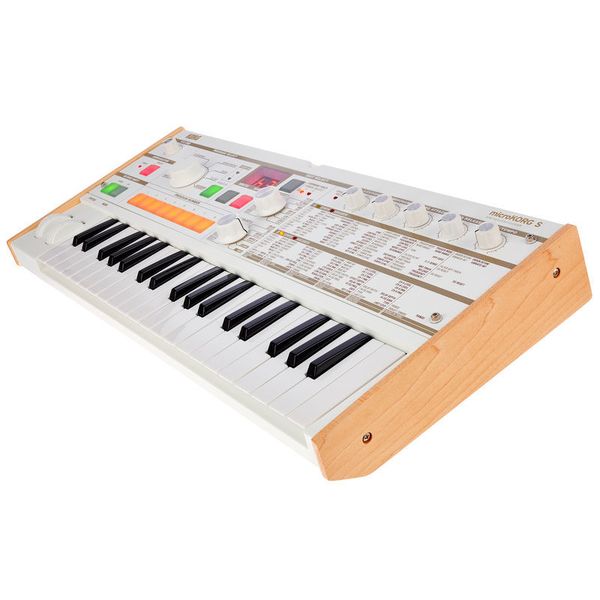
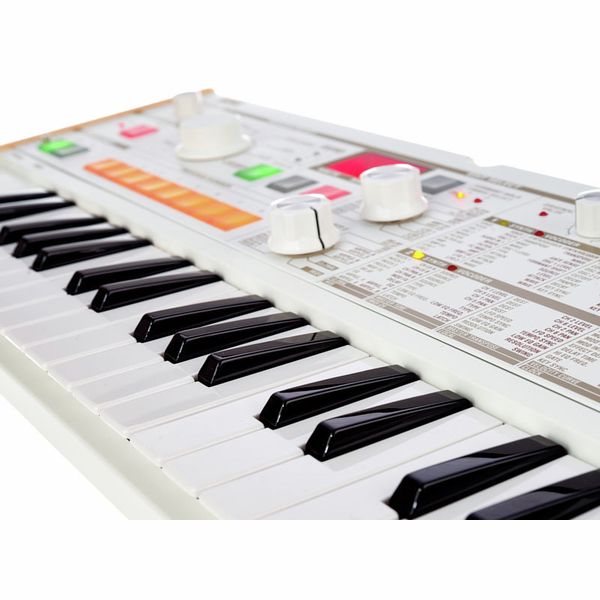
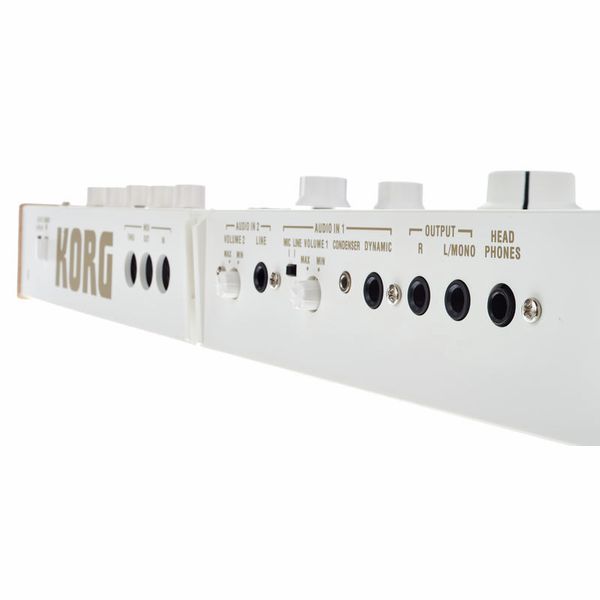
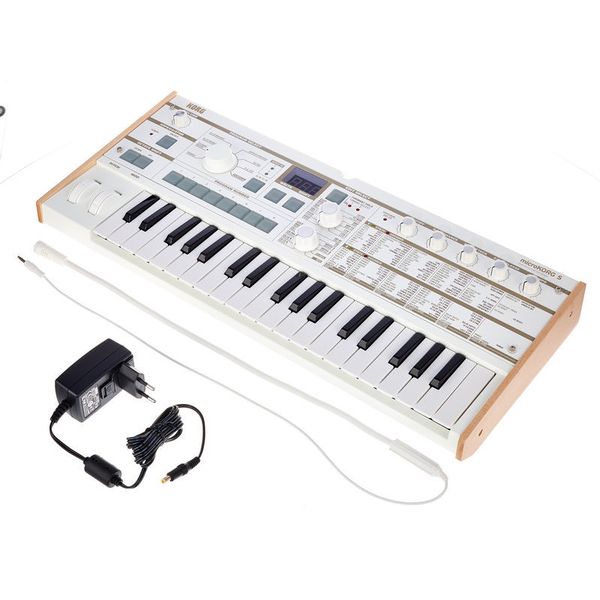


Analog Modeling Synthesis System
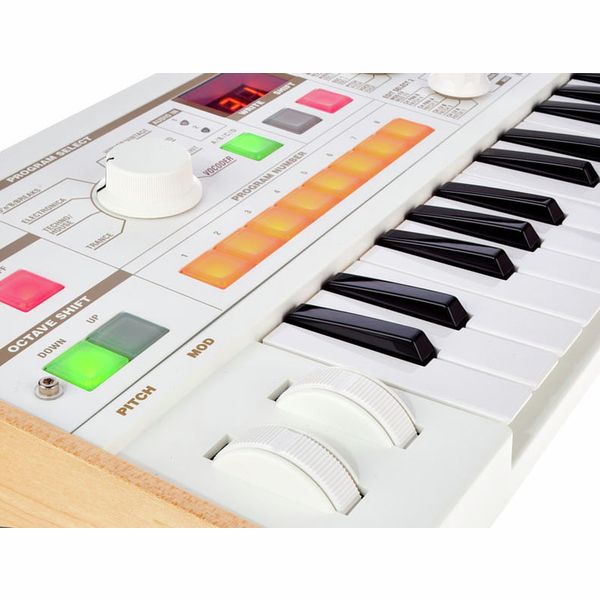
- 37 Velocity sensitive slim keys
- 2 Oscillators and noise generator
- Vocoder: 8 Bands
- Max. polyphony: 4 Voices
- Integrated 2 + 1 speaker system for optimal sonority
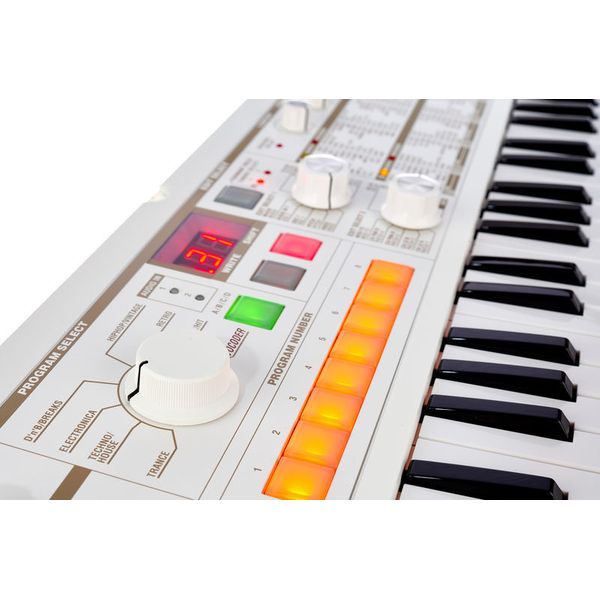
- 256 Programs - 192 presets / 64 Users
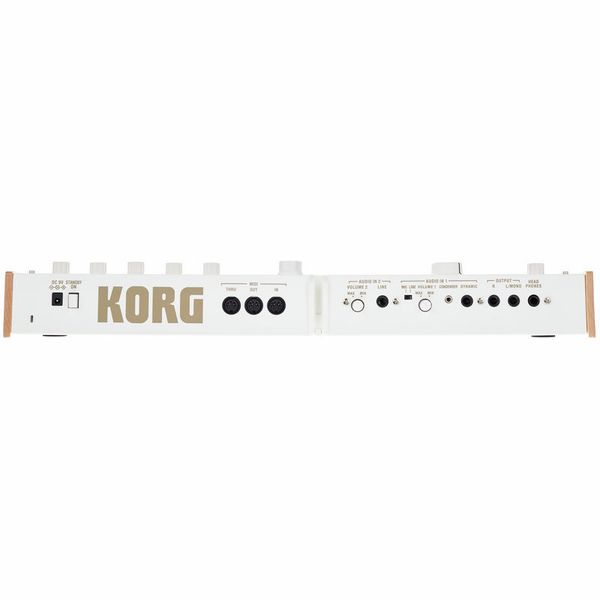
- Audio Input
- Stereo output
- MIDI: In / Out / Thru
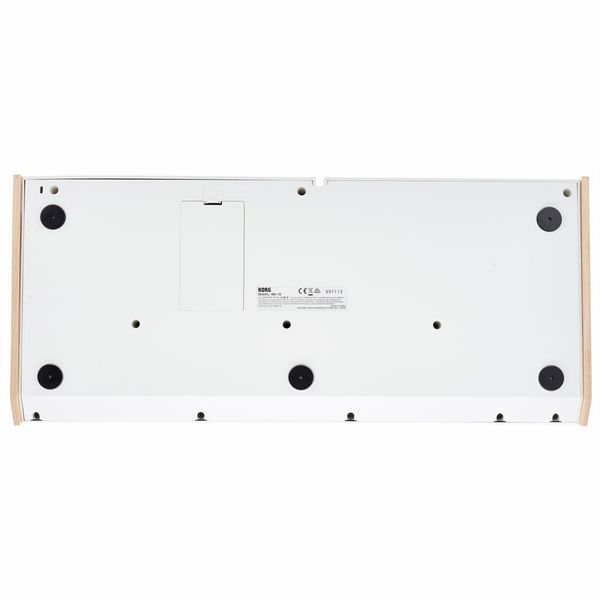
- Optional battery operation (6 x AA batteries)
- Dimensions (W x D x H): 524 x 232 x 70 mm
- Weight: 2.5 kg
- Incl. power supply and gooseneck microphone
Effects:
- Modulation: 3 Types
- Delay: 3 Types
- Equalizer
- Arpeggiator: 6 Types
-
Available since October 2016
-
Item number 398386
-
Sales Unit 1 piece(s)
-
Number Of Keys 37
-
Touch-Sensitive Yes
-
Aftertouch No
-
Split Zones No
-
Modulation Wheel Yes
-
Number of simultaneous Voices 4
-
Sound Engine Virtual Analogue
-
MIDI interface 1x In, 1x Out, 1x Thru
-
Storage Medium None
-
USB-port No
-
Effects 1x Multi Effect Processor
-
Arpeggiator Yes
-
Number of Analog Outputs 2
-
Digital Output No
-
Display Yes
-
Pedal Connections None
-
Dimensions 524 x 232 x 70 mm
-
Weight 2,2 kg
-
Immediate playability in a compact package
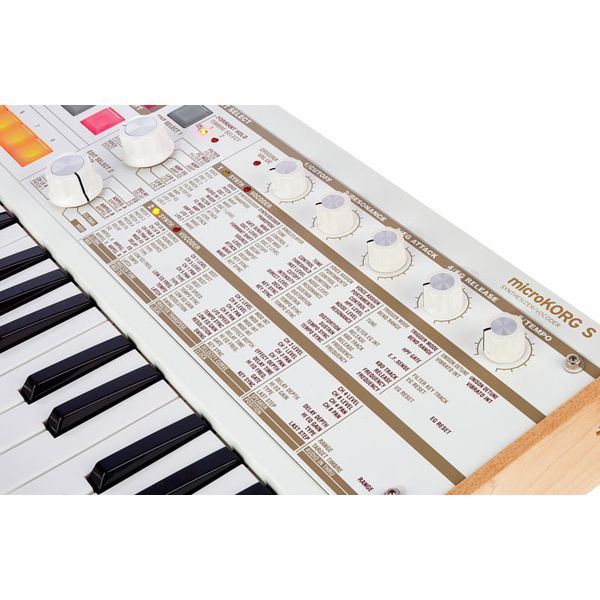
The microKORG S is a compact, four‑voice desktop synthesizer with an integrated vocoder and built-in 2.1 speakers, with a woofer for dedicated low-end response. Under the hood, it runs on the same DSP engine as Korg's MS2000B. Added to that are 64 DWGS waveforms, also found in the Korg DW8000. That shared lineage gives the instrument a clearly recognisable voice; it will appeal immediately to producers and performers who want a strong, distinctive sound, rather than deep, menu‑driven programming. This focus is already apparent in the factory programs, which are deliberately geared towards electronic styles such as House, Trance and Hip‑Hop. That said, the microKORG S far more than just a simple preset machine. The first oscillator alone offers over 70 different waveforms, while sound shaping is handled by four filter modes, two ADSR envelopes, and a pair of LFOs. The amp section takes care of level and panning, and its built‑in distortion adds extra weight and punch to the sound.

)
Playable musicality
Despite its emphasis on playable musicality – evident both in the velocity‑sensitive mini keyboard and the integrated vocoder mic – the microKORG S has a broad and flexible sound engine. Oscillator 1 provides the classic waveforms such as sawtooth, pulse, sine, and noise, while the second expands this palette with additional variations. There are also alternative algorithms to choose from, including Vox Wave and Cross Wave. The DWGS waveforms give artists access to more complex instruments like bells, electric pianos, guitars, and basses. With a total of 128 programs, the microKORG S offers a wide range of immediately playable sounds, which can be shaped further using the two‑band EQ and the resonant multi‑mode filter. That filter can self‑oscillate if required and switches between a –12 dB (two‑pole) low‑pass, high‑pass, and band‑pass, as well as a steeper –24 dB four‑pole low‑pass filter.
)
Versatile vocoder
One of the microKORG S's key features is its integrated vocoder, which makes it particularly appealing for electronic performances. Here, the human voice controls the synthesis process, allowing for organically expressive lines, as well as complex tonal fragments. On the microKORG S, the built‑in 2.1 speaker system with integrated subwoofer adds another dimension, for a very physical playing experience. Low‑frequency content isn't just audible, but can also be felt – much like an acoustic instrument, where vibrations are perceived right through the fingertips. Alongside this, the microKORG S can process external audio signals in real time via its two audio inputs, for example from mics or drum machines. Anyone who spends a lot of time on the move will also appreciate its portability. With battery operation and integrated speakers, the microKORG S is a genuinely effective standalone instrument.
)
About Korg
For many years, the Korg brand has been synonymous with innovative synthesizers, workstations, keyboards, digital pianos, and more. With instruments such as the MS20, Polysix, Wavestation, KRONOS, and the Volca series (to name but a few), the Japanese company founded by Tsutomu Kato and Tadashi Osanai in 1963 has created legendary synthesizers whose names are music to the ears of many keyboard players. In addition, the Korg company is the inventor of the world's first handheld tuner, the WT-10. However, Korg has always stood for quality and innovation, not only in analogue synthesizers, digital workstations, arranger keyboards, and digital pianos, but also in guitar amplifiers. After Korg acquired the brand rights to Vox Amplification Ltd. in 1992, Korg expanded the Vox brand to include inexpensive digital guitar amplifiers with integrated modelling technology, in addition to new versions of the legendary AC30.
That real Korg sound
Despite its compact dimensions, the microKORG S offers a level of sonic complexity that's unusual for its price bracket. Effects such as vibrato, wah, and tremolo help bring patches to life, while the two LFOs are primarily used for rhythmic modulation of the timbre and tonal colour. If needed, these can also be synchronised via MIDI, which is particularly useful in hybrid setups. For more advanced shaping, there's a virtual patch matrix that mirrors the classic routing of analogue Korg synths from the PS and MS series, allowing modulation source, destination, and intensity to be freely assigned. Deeper access is possible via the USB‑MIDI interface and the accompanying software editor, where parameters are displayed clearly in a graphical layout. Custom settings can then be saved as presets. Taken together with the many factory programs, neatly organised by musical style, the microKORG S works equally well as an accessible entry point into synthesis and as a fast, dependable tool for experienced producers and live performers alike.
