

To the page content

Hybrid Wavetable Synthesizer

  • 24-Voice polyphonic
  • 4-part multitimbral
  • 3 digital oscillators per voice
  • 64 user wavetable positions with 48 wavetables with 64 waveforms per table
  • 32 original 8-bit wavetables of the PPG2 instruments
  • 7 modelled analogue waveforms (Sine, Saw, Triangle, Supersaw, Pulse, White Noise, Pink Noise)
  • VCO sync
  • Linear FM
  • Analogue low-pass filter (Dave Rossum design)
  • State-variable filter
  • 4 x ADSR+ delay envelopes
  • 4 x LF oscillators (Triangle, Sawtooth, Reverse Sawtooth, Square, Pulse 1, Pulse 2, Pulse 3 and Random (S&H))
  • 2 digital effects processors (BBD, Stereo Delay, Tape Delay, Chorus, Phaser, Flanger, Distortion Pedal, Rotating Speaker, Ring Mod, Room Reverb, Hall Reverb, Super Plate Reverb)
  • Built-in Custom Wavetable Maker 16-bit / 96 kHz (sample-to-wave function)
  • Sequencer (4 multi-part songs per programme, 24 sequences per song)
  • Arpeggiator
  • 16-slot modulation matrix per multi-part
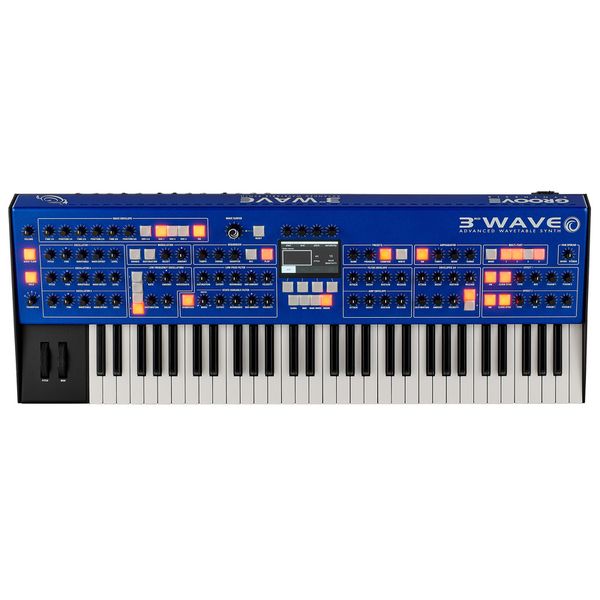
  • 77 knobs and 39 buttons
  • Pitch and mod wheels
  • 61-key velocity-sensitive Fatar keyboard, semi-weighted with aftertouch
  • 500 presets (can be overwritten by user presets)
  • Built-in power supply 100 - 240V, 50 - 60 Hz, 65 Watt
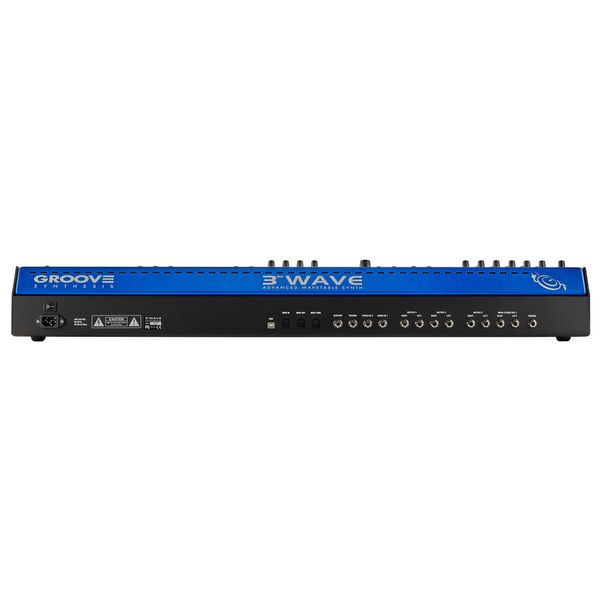
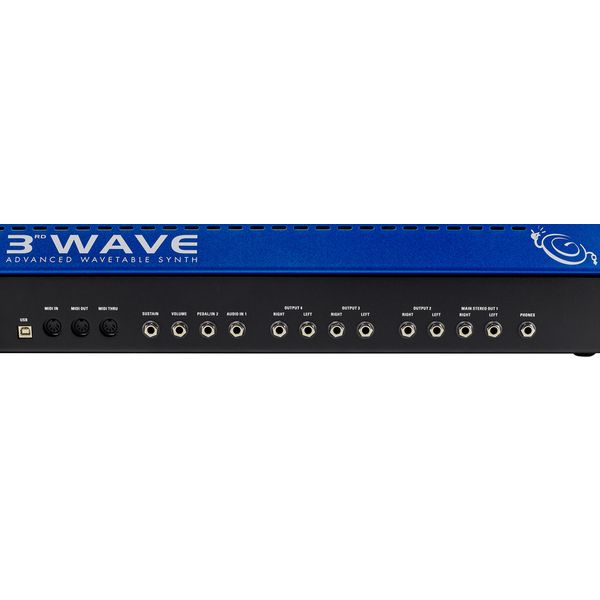
  • Line output: 8 x 6.3 mm jack (4 x stereo L/R )
  • Stereo headphone output: 6.3 mm jack
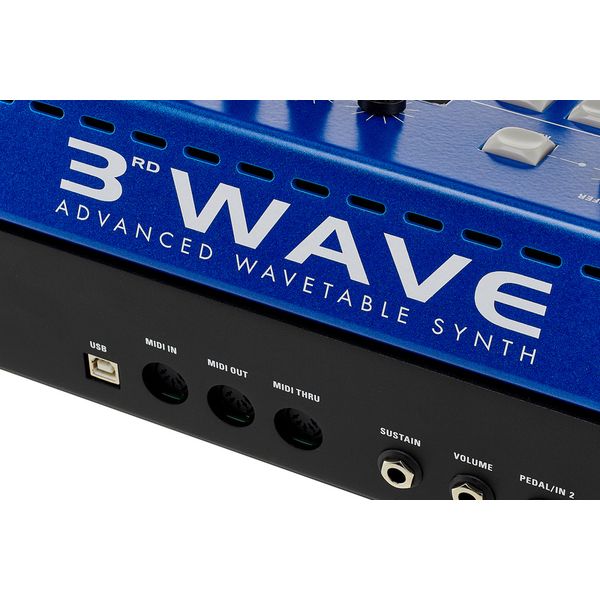
  • MIDI In / Out / Thru
  • USB MIDI
  • Line input: 6.3 mm jack
  • Pedal input: 6.3 mm jack for sustain/foot switch
  • Volume and expression pedal input: 6.3 mm jack
  • Dimensions (W x D x H): 978 x 362 x 127 mm
  • Weight: 12.3 kg
  • Available since August 2023
  • Item number 572682
  • Sales Unit 1 piece(s)
  • Number Of Keys 61
  • Touch-Sensitive Yes
  • Aftertouch Yes
  • Split Zones No
  • Modulation Wheel Yes
  • Number of simultaneous Voices 24
  • Sound Engine Digital
  • MIDI interface 1x In, 1x Out, 1x Thru, USB
  • Storage Medium Internal
  • USB-port Yes
  • Effects 2x Multi Effect Processor
  • Arpeggiator Yes
  • Number of Analog Outputs 8
  • Digital Output No
  • Display Yes
  • Pedal Connections 3
  • Dimensions 978 x 362 x 127 mm
  • Weight 12,3 kg
£4,999
All prices incl. VAT
In stock
1

Flagship synth for live work & sound design

The Groove Synthesis 3rd Wave is the flagship of the California-based manufacturer and is aimed at musicians who want to combine uncompromising sound quality with direct, expressive control. As a fully featured wavetable synthesizer with a high-quality 61-note aftertouch Fatar keyboard, it brings together a complex wavetable architecture with a clear focus on musicality and immediate hands-on access. With its 24 voices and four-part multitimbrality, the 3rd Wave delivers the depth and flexibility needed for both modern productions and live setups. While the smaller desktop variants in the range offer the same sound engine in more compact formats for hybrid setups, this full-size model really comes into its own when played as a standalone or centrepiece instrument – seamlessly combining sound design and performance.

Groove Synthesis 3rd Wave, hybrid wavetable synth

Endless sonic possibilities...

At the core of the Groove Synthesis 3rd Wave are three oscillators per voice, covering a wide range of sound sources: classic PPG wavetables, high-resolution modern wavetables, and analogue waveforms. In total, the 3rd Wave offers 32 classic and 48 high-resolution (and user-defined) wavetables, each with 64 waves. Transitions can be shaped smoothly or stepped for a more deliberately digital character. The Wavemaker tool makes it possible to create, edit, and store custom wavetables directly on the instrument. Samples can also be imported and converted. For further sound-shaping, there are two filters: an analogue 2140 low-pass filter designed by Dave Rossum, with variable saturation, and a flexible SEM-inspired filter that can operate as a low-pass, high-pass, band-pass or notch filter.
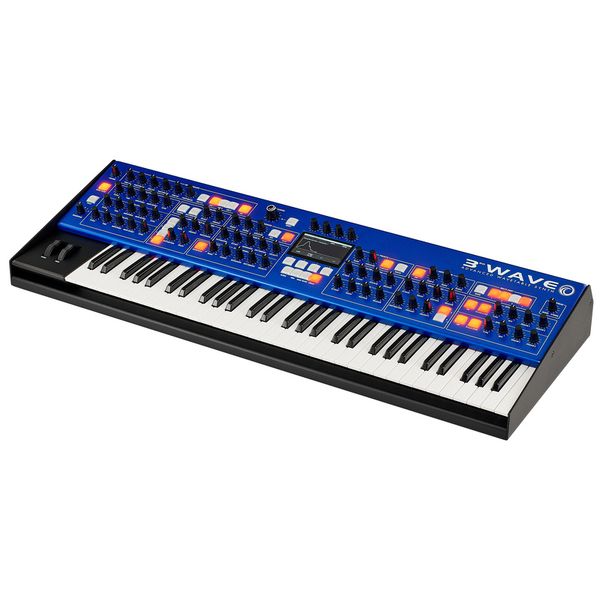
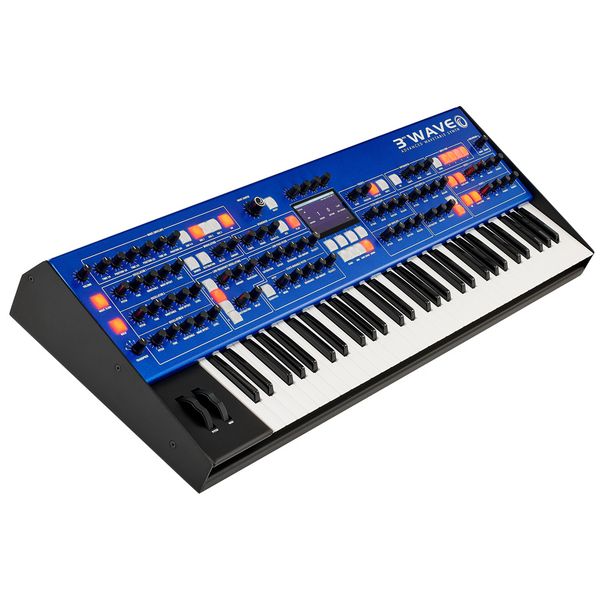
Groove Synthesis 3rd Wave, with 61-key Fatar keyboard

...expressive synth performances

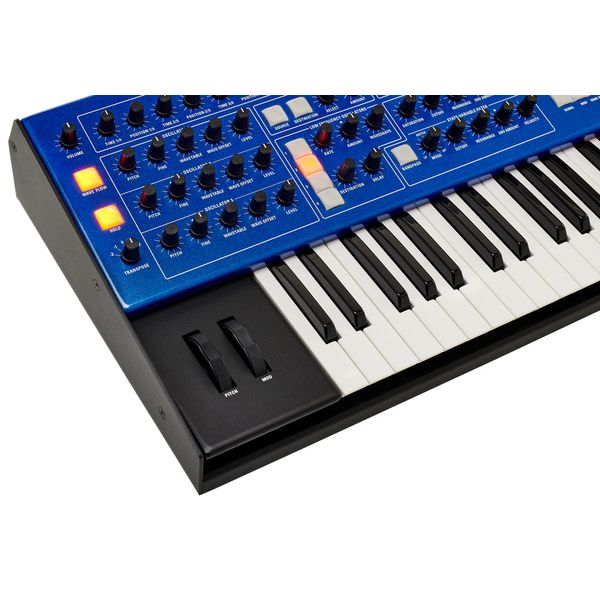
The velocity-sensitive 61-note Fatar keyboard with aftertouch is the heart of the Groove Synthesis 3rd Wave and allows for nuanced playing with direct control over many sound parameters. Pitch and modulation wheels are, of course, included, along with connections for sustain, expression, and volume pedals, making it easy to integrate into performance-oriented setups. Four independent layers allow musicians to play multiple sounds at once, either stacked or split across the keyboard. Each layer has its own outputs, so complex setups can be mixed and processed externally – ideal for live performance or multi-channel studio environments. In practice, this means both precise digital tones and warm, organic textures are always right at the player's fingertips.
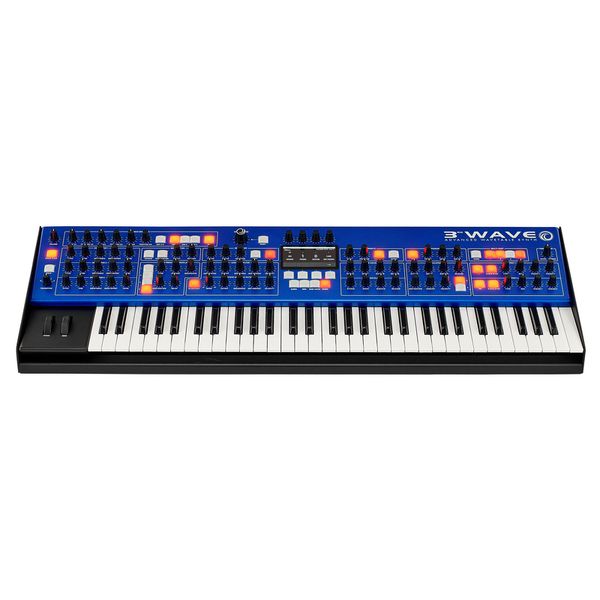
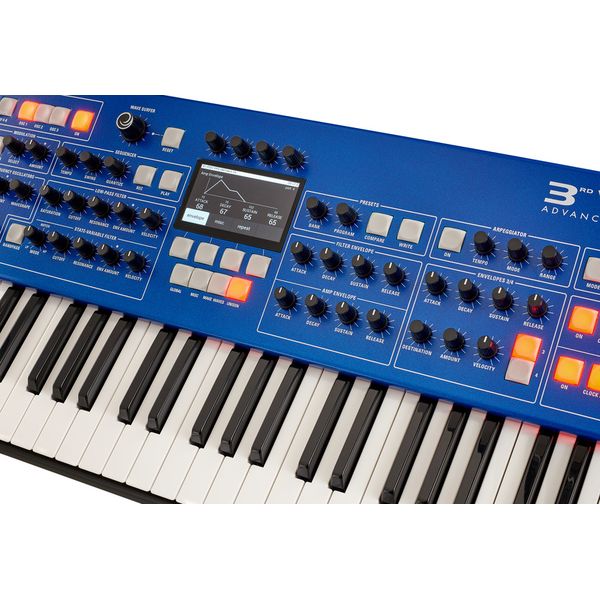
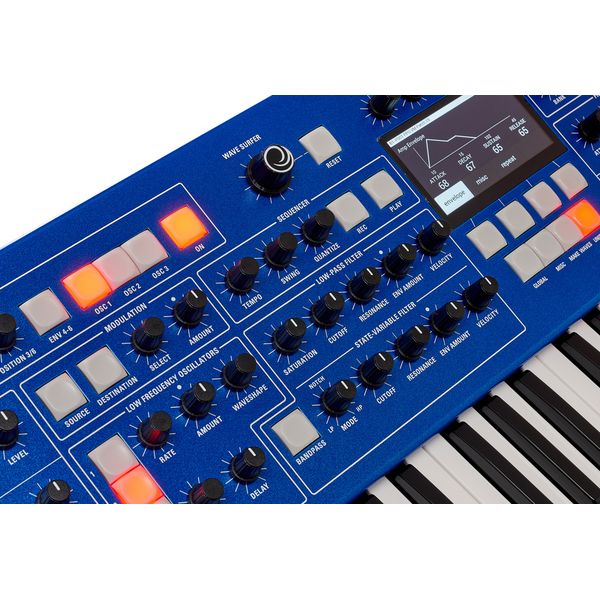
Groove Synthesis 3rd Wave, control panel

Synthesis and sequencing

The internal sequencer on the Groove Synthesis 3rd Wave allows modulations to be recorded and automated directly within the instrument. Parameters such as filter cutoff, envelopes, or effects can be shaped dynamically and combined into evolving sound movements: Recorded patterns can then be arranged into complete compositions. The behaviour of the envelopes can also be switched, from modern exponential curves to a character inspired by classic PPG instruments. As a result, the 3rd Wave moves easily between clean digital definition and a more deliberately vintage flavour.
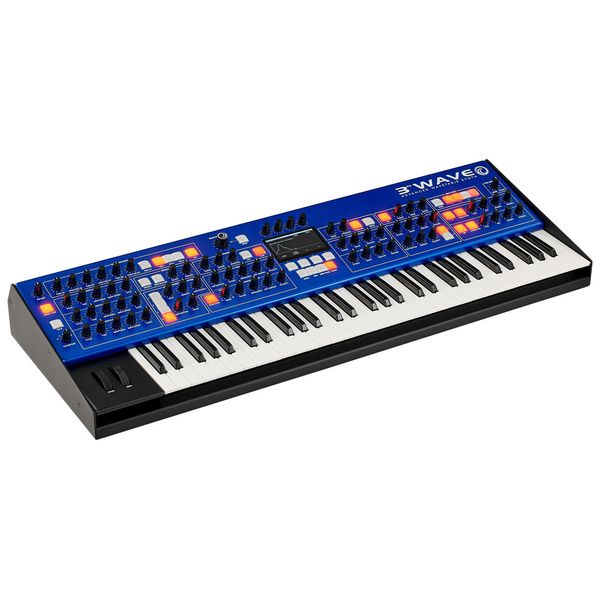
Groove Synthesis 3rd Wave, hybrid wavetable synth, manufacturer's logo

About Groove Synthesis

Based in the San Francisco Bay Area, Groove Synthesis was founded by a team of synthesizer veterans who previously contributed to instruments made by AVID, Digidesign, Sequential, and Oberheim. Drawing on decades of expertise, they craft innovative instruments that blend emotional sound design with cutting-edge technology. Their flagship product, the 3rd Wave, is a hybrid wavetable synthesizer that merges analogue warmth with digital flexibility, inspiring musicians with rich, evolving textures. Born from a passion for classic synths, the 3rd Wave reimagines vintage concepts for the modern era, pushing creative boundaries.

A modern instrument with a vintage heritage

The 3rd Wave builds on the legacy of wavetable synthesis while reinterpreting it, even reinventing it, in a contemporary context. This powerful synth's combination of digital sound generation, flexible wavetable editing, and analogue filtering makes it an instrument that both treads some familiar sonic territory – at the very highest level – while still opening up some new, uniquely expressive possibilities. Taking all this together, the Groove Synthesis 3rd Wave has clearly been conceived to function as the central instrument in a professional musician's arsenal – for keyboardists who don't just enjoy designing sounds in great detail, but also want to be able to perform them with immediacy, intensity, and nuance.
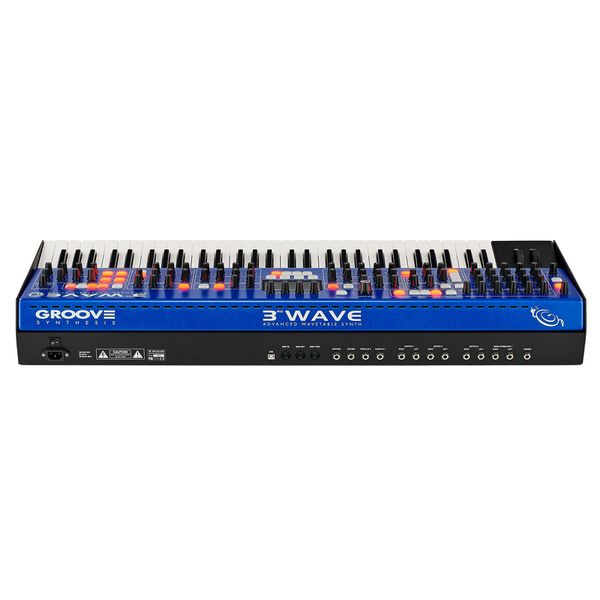
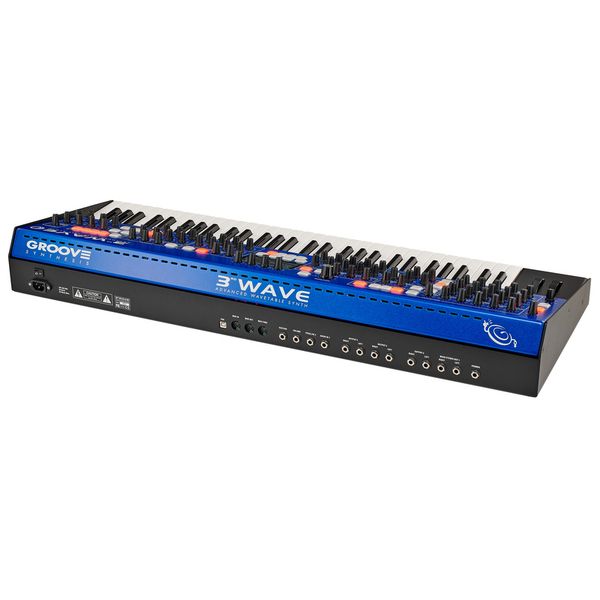
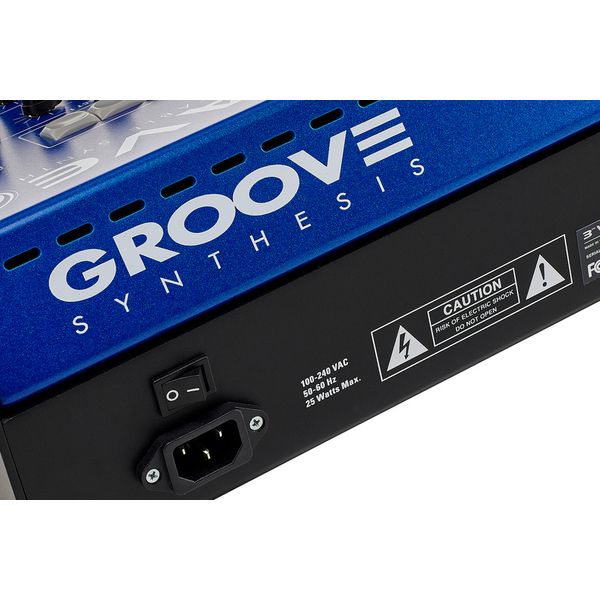
Groove Synthesis 3rd Wave, hybrid wavetable synth, rear view

3 Customer ratings

5 / 5

handling

features

sound

quality

3 Reviews

google translate de
Unfortunately there was an error. Please try again later.
d
Wie von einem anderen Stern
dev/sda1 03.09.2023
Als originärer New Wave Gitarrist, Anfang der Eighties Zwanzig, hatte ich immer eine Affinität zu Synthesizern. Ohne jetzt ins Detail bezüglich meiner ehemaligen Gerätschaft gehen zu wollen sei dennoch zumindest erwähnt, dass ein Waldorf Microwave 1 dabei war, mit dem sich der 3rd Wave den hybriden Aufbau teilt.

Dieser ist ohne jeden Zweifel eine neue Referenz, der das Potenzial hat den gesamten Markt, auch den der Vintage Instrumente neu zu justieren.

Der Sound ist überirdisch, man muss die Sweetspots nicht suchen, das Gerät besteht ausschliesslich - über den gesamten Tastaturbereich - aus solchen, auch wenn nicht alle Presets dies gleich offenbaren. Ich finde es ein wenig schade dass die Company so viele Speicherplätze mit Brot und Butter Patches verschwendet. Sie zeigen nicht ansatzweise das immense Potenzial dieser Maschine. Eher Jim Danekers YT Video Zero to Hero.

Dank der zusätzlichen VA Sektion im Oszillatorenbereich ist man nicht ausschliesslich auf Wavetables festgelegt. Die "analoge" Abteilung klingt nicht zuletzt wegen des analogen Dave Rossum Prophet 5 TP Filters mit Resonance Compensation und Saturation absolut authentisch! Aber auch die Wellenformen ansich sind erwähnenswert weil über den Standard hinaus gleich mehrere Rauschspektren, Sinus und Supersaw an Bord sind.

Das vorgeschaltete State Variable Filter ist zwar digital, klingt aber ebenfalls analog und verhilft dem ohnehin sehr kompletten Synth zu noch mehr klanglicher Flexibilität.

Kennt noch jemand Trevor Horn? ABC, Propaganda, Art Of Noise, Frankie Goes To Hollywood? Sounds wie diese sind ein Kinderspiel für diesen an den Achtzigern orientierten Synthesizer, hier vereint in einem EINZIGEN Gerät! Dabei kann er wie ein Moog, Sequential, Oberheim, Yamaha oder Roland, ja sogar Fairlight klingen. Aber geht noch weit darüber hinaus. Auch die PPG Abteilung ist meilenweit von den beschränkteren Möglichkeiten in den Eighties entfernt, 3 Oszillatoren! die 96khz WT sind frei von Aliasing. Ein „Wave Flow“ Taster glättet auf Wunsch die recht kantigen 8 Bit PPG Wellenformen.

Nie zuvor hatte ich mit einem so kompletten und zugleich einfach und intuitiv zu bedienenden internen Sequenzer zu tun, ein absolutes Highlight. Die nachgeschaltete FX Sektion macht erste Entwürfe noch plastischer, Die Oszillatoren klingen aber auch ohne top.

Wer sich traut den Unison Button zu betätigen wird umgehend mit einer Fönfrisur belohnt, sehr konsequent für einen Achtziger Synth. Ist mir in dieser Intensität noch nie zu Ohren gekommen, gehört eher in die Rubrik Naturkatastrophen wenn alle Oszillatoren am Start sind.

Ein Display, ungefähr einen Tick größer als eine Kippenschachtel für € 8 visualisiert jeweils signifikant wichtige Reglerbewegungen wie z.B. Wellenformverläufe, Envelopes oder Einstellungen im umfangreich ausgestatteten Sequenzer.

Die Vielzahl an LFO‘s und Envelopes, Sync, lineares FM, RingMod usw in Verbindung mit der ModMatrix lässt eigentlich keine Wünsche bezüglich Modulationsmöglichkeiten offen.

Eigens eingespeistes Material (Serum WT Import inkl.) werden vom Gerät in kürzester Zeit zu einem Wavetable konvertiert, eine sehr rechenintensive und komplexe Angelegenheit.

Das äußerst robuste Gerät ist intuitiv zu bedienen und sieht mega sexy aus. Der GS Support nimmt seine Customer sehr ernst und ist am Austausch mit ihnen interessiert. Es gibt eine Datenbank mit Vorschlägen für OS Updates. Meine Anfragen waren eine Key Follow Funktion für Noise, ein Bit Crusher im FX Bereich, Crossmodulation und die Möglichkeit die Filter auch parallel betreiben zu können.

Diese Anfragen sind nicht als Kritik zu verstehen. Der Synth ist aktuell schon kompletter als das Allermeiste am Markt.

Zu den übersichtlichen Cons zählt das Limit von 16 Slots für eigene Wavetables und das fehlen einer Poly AT Tastatur, extern empfangen ist aber möglich.

Organische Sounds mit Autorität, lebendige Texturen, viel Low End und crispe Höhen gepaart mit Highlights in jeder Sektion des Synths, Stereo Pan Spread, Wave Import und ENDLICH mal wieder einer mit richtig langer Einschwingphase in den snappy Envelopes! So gelingen traumhafte Ambient Landschaften, aber auch knackige Bässe und Co. Generell lässt das klangliche Spektrum, von Granular und Resonator abgesehen keine Wünsche offen. Das ist verschmerzbar, lässt sich als Sample importieren um dann zum Wavetable konvertiert zu werden. Infinite!

Ich sehe schon wieder die alte Diskussion aufflammen, ob denn ein Digitaler wirklich analog klingen kann…. Dieser kann es, free Running LFO‘s und Circuit Drift sind sicherlich Funktionen die dies über den bereits überzeugenden Grundsound zusätzlich befeuern.

Ich habe einen direkten A/B Vergleich mit meinem unscheinbaren und weit unterschätzten Sequential Take 5 - dem besten Prophet aller Zeiten - gemacht. Wenn mich nicht alles täuscht haben beide das selbe Tiefpassfilter, Einstellungen aneinander angepasst und verglichen. Man bekommt ein nahezu redundantes Ergebnis.

Die wohl relevanteste Frage potenzieller Käufer: Waldorf Quantum/Iridium oder 3rd Wave? Schwierig! Meine persönliche Präferenz ist an erster Stelle authentisches Analoges, deshalb ist es für mich der 3rd Wave. Bei den Wavetables sehe ich qualitativ ein Patt. Resonator, sechs Operatoren FM und Granular gehen an Waldorf. Es ist hier eine Frage der persönlichen Vorlieben.

Da auch Waldorf eine vorbildliche Produktpflege betreibt bleibt es für jene deren Budget begrenzt ist eine Wahl die in beiden Fällen eine sehr gute ist.

Mein Main Setup besteht nunmehr aus vier Geräten. Elektron Digitakt Groovebox, Sequential Pro 3 SE Monosynth, Iridium Keyboard und 3rd Wave als Polys.

Letzterer teuer, sehr teuer aber jeden Cent Wert. Der 3rd Wave ist ein Superlativ bei dem man davon ausgehen darf dass die Company seine ohnehin mehr als beeindruckenden Funktionen weiter voran treiben wird. Ohne zu wissen dass er jemals das Licht der Welt erblicken erblicken würde: Für mich als Eighties New Wave Kid DER Synthesizer auf den ich 40 Jahre warten musste. Ein Synthesizer der einander widerstrebende Klangideale offeriert, analog und digital, eine Reise in die Vergangenheit ebenso selbstbewusst zulässt wie Ausflüge in die Zukunft. Einmal mehr, es lässt sich nicht ansatzweise in Worte fassen was der Synth zu leisten imstande ist!
handling
features
sound
quality
119
3
Report

Report

google translate de
Unfortunately there was an error. Please try again later.
CD
Was braucht man mehr?
Count Dooku 07.09.2023
In der oben stehenden Bewertung wurde schon alles wesentliche gesagt. Ich empfehle ergänzend dazu, die Miles Away Patches zu beschaffen. Sie berücksichtigen die atemberaubende VA Sektion weit mehr als die Factory-Sounds. Man ja, etwas pauschal gesagt, auch gleich einen Prophet und OB mit dabei. Und das 24stimmig und mit vierfachem Multimode.
Was braucht man mehr?
Ein Gerät von dem man jeweils nur sehr schwer wieder los kommt, sich dann aber wie erleuchtet fühlt.
handling
features
sound
quality
52
7
Report

Report

google translate fr
Unfortunately there was an error. Please try again later.
AD
Un synthé exceptionnel
Albert D 12.08.2024
Cela faisait plus d'un an que j'hésitais : j'ai déjà pas mal de claviers, un de plus était-il raisonnable ? Je l'ai depuis un mois et je suis loin d'en avoir encore faire le tour, mais
- la qualité de fabrication est exemplaire
- l'utilisation est très agréable : boutons de bonne taille avec juste la résistance qu'il faut, crantés ou non, et touches carrées bien dimensionnées
- le look PPG est sympa, le bleu tranche bien avec d'autres synthés
- 24 voies de polyphonie et multitimbralité 4 parties, c'est vraiment le top
- le séquenceur avec possibilité d'avoir une séquence par part - et la mise à jour très récente 1.8e - c'est vraiment bien, y compris pour faire des boucles en live
- et surtout, le son est incroyable : non seulement on retrouve le côté spécifique aux PPG mais on fait encore mieux avec les tables d'onde haute définition. Cerise sur le gâteau : il est excellent aussi en synthèse classique, avec des formes d'ondes correspondant aux synthés analogiques ou issus de cette tradition. Par exemple, il peut pratiquement reprendre les sons que j'ai programmés sur mon Prophet 12, y compris en imitant grâce à des tables d'onde bien choisies les formes d'onde du Prophet 12 en plus des triangles, sawtooth et pulse, comme "nasal" ou "gothic", et il a un supplément de dynamique assez impressionnant.
- Donc on peut s'en servir pour faire des sons qui soient centralement issus de la tradition PPG, mais on peut aussi faire des sons analogiques plus classiques mais en ajoutant des colorations en utilisant une table d'onde pour un des trois oscillateurs, un peu comme on peut colorer des samples avec les oscillateurs classiques sur un prophet X.

Je n'ai pas encore testé l'import de tables d'ondes personnelles ni le sampling. Sur le sampling l'espace mémoire réservé aux samples est assez limité, donc n'espérez pas non plus utiliser ce synthé centralement en mode sampleur, de toute façon ce n'est pas sa vocation.

Evidemment il y a quelques limites : on peut faire des sons très complexes, très impressionnants à jouer seuls, mais attention à l'inclusion dans le mix : "simple can be beautiful". Mais l'avantage du 3rd wave est que même avec un seul oscillateur le son peut être subtil. Autre limite : le clavier n'a pas d'aftertouch polyphonique. J'ai échangé avec Andrew et Bob, les concepteurs - un grand merci à eux pour leur talent, mais aussi pour leur ouverture et leur humilité ! - et ils m'ont dit qu'il y avait des demandes mais que ce n'était pas une priorité à ce stade vu la complexité de programmation. Cela dit le clavier accepte des entrées MPE donc si vous avez un Osmose ou des claviers ROLI, ça peut le faire ! J'ai hésité un peu, en fait, avec l'Arturia Polybrute 12, qui n'a pas du tout la même palette sonore mais qui a un clavier expressif incroyable (je suis pianiste, à la base) mais les 23 kilos de la bête m'ont dissuadé. Au registre des claviers avec aftertouch polyphonique, j'ai regardé aussi l'Hydrasynth version deluxe, très intéressant aussi, mais, à nouveau, c'est la palette sonore du 3rd wave qui m'a convaincu.

Il y a des petites choses à améliorer comme le fait d'ajouter un bouton "back" plus systématiquement quand on navigue dans certaines menus, mais l'équipe est à l'écoute de tout cela et ce sera amélioré dans les prochaines mises à jour.

Au total, ce synthé est extraordinaire et la qualité est présente à tous les étages ! L'instrument prend tout de même un peu de temps à apprivoiser, même après presque 40 ans d'habitude de programmation de synthés de type Moog ou Séquential. Notamment le principe des wave enveloppes est assez touchy, mais ça fait une partie de l'âme du synthé, comme le disent ses créateurs dans le mode d'emploi.

Evidemment le prix est en conséquence, mais je ne regrette pas l'investissement. Et côté styles de musique : je n'en vois aucun qui soit interdit au 3rd wave !
handling
features
sound
quality
31
1
Report

Report