


Arturia DrumBrute Impact

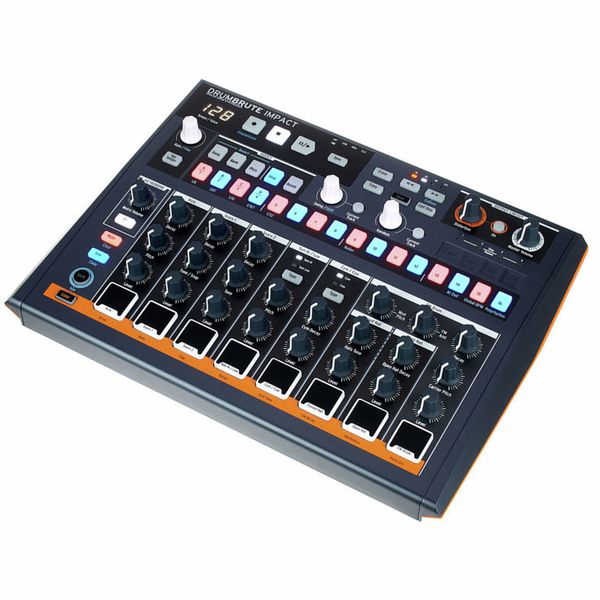
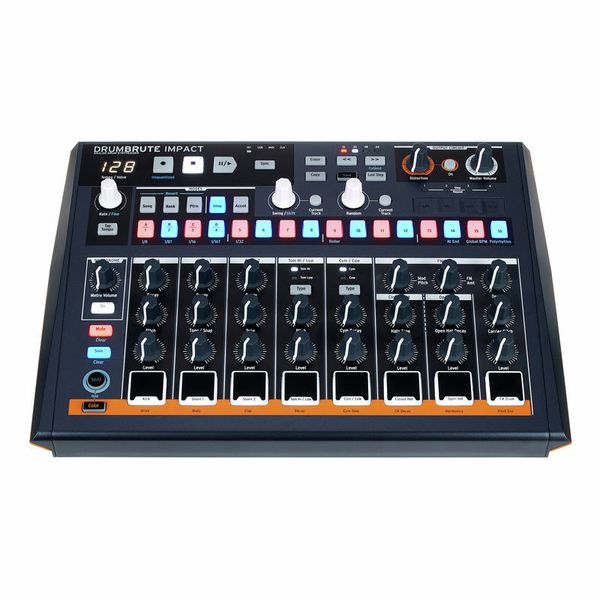
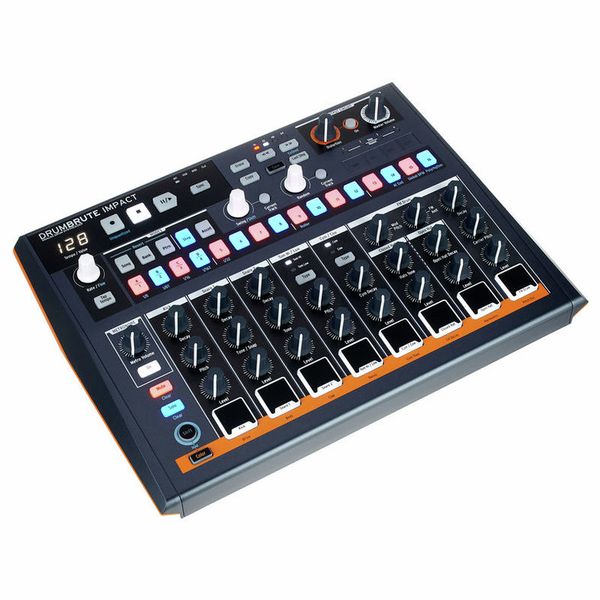
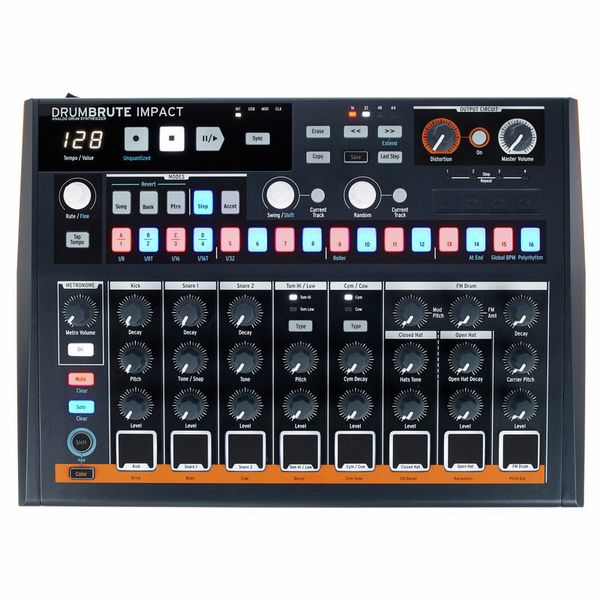


Analog Drum Computer
- 10 Sounds: Kick, Snare 1, Snare 2, Tom Hi, Tom Low, Cowbell, Cymbal, Closed Hat, Open Hat and FM
- 64 Patterns, each with up to 64 steps
- Accentuation and switchable colour tonal colouration per instrument and step
- Song mode
- Poly-rhythm function
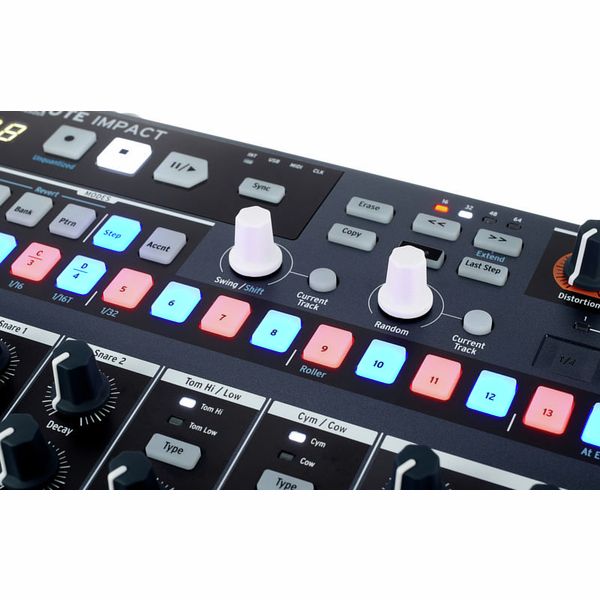
- Swing function
- Random
- Pattern looper
- Roller for drum rolls in real time
- Distortion effect can be switched to sum
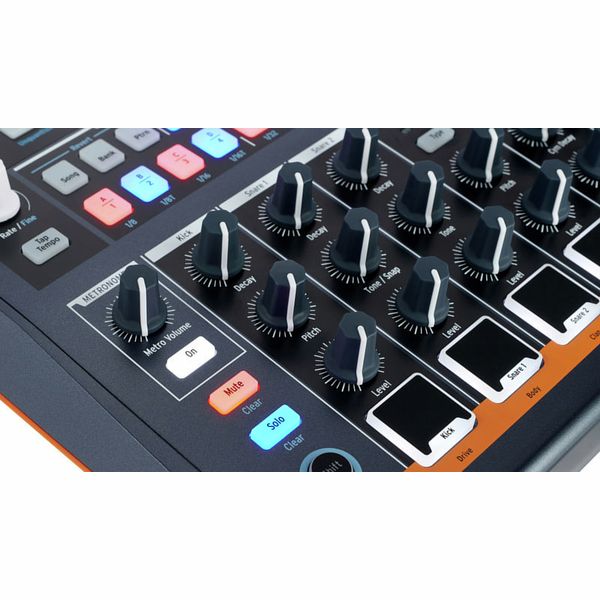
- Integrated metronome
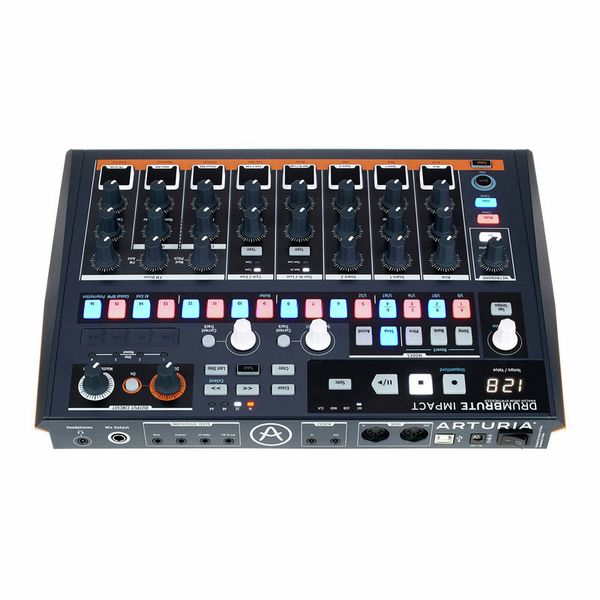
- Flexible sync options: Internal / MIDI / Clock, incl. 1PPS, 2PPQ, DIN24 and DIN48
- USB MIDI interface
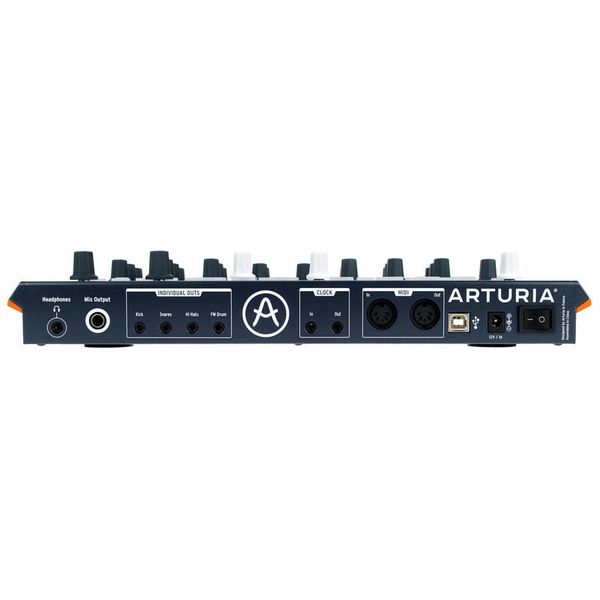
- Line output: 6.3 mm Jack
- Group outputs for kick, snare, hi-hats and FM
- Stereo headphone jack: 3.5 mm Mini jack
- Clock input and output: 3.5 mm Mini jack
- MIDI input and output
- USB
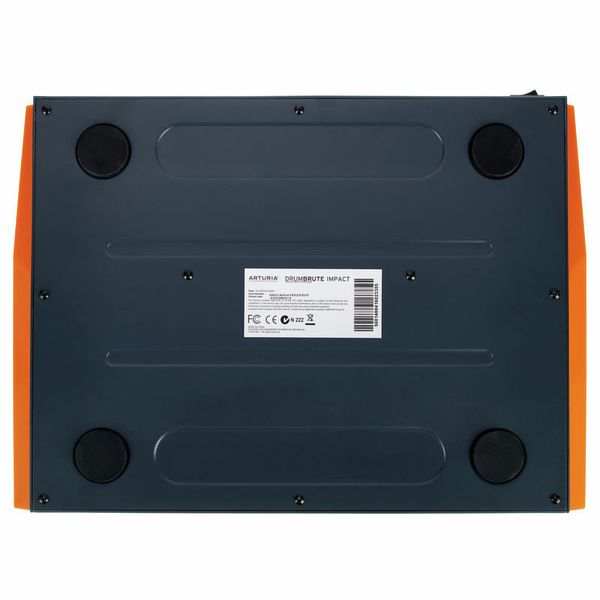
- Weight: 1.84 kg
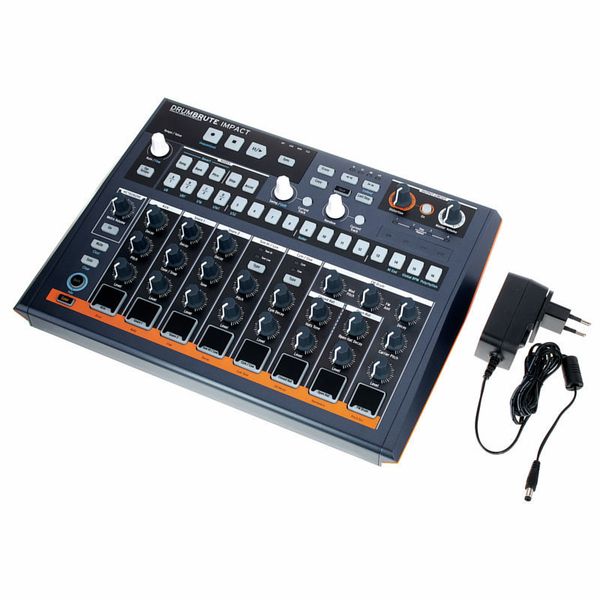
- Includes external power supply
- Suitable optional bag: Art.493541 (not included)
-
Available since August 2018
-
Item number 444377
-
Sales Unit 1 piece(s)
-
Sound Synthesis Analogue
-
Pads 8
-
Effects Yes
-
Bass Yes
-
Display Yes
-
MIDI interface 1x In, 1x Out
-
Number of analog outputs 5
-
Headphone Connector Yes
-
Mains Operation Yes
-
Battery Operation No
-
Footswitch connection 0
-
Extras Clock In/Out
-
Shape Desktop
-

Brute drum synthesis and sequencing
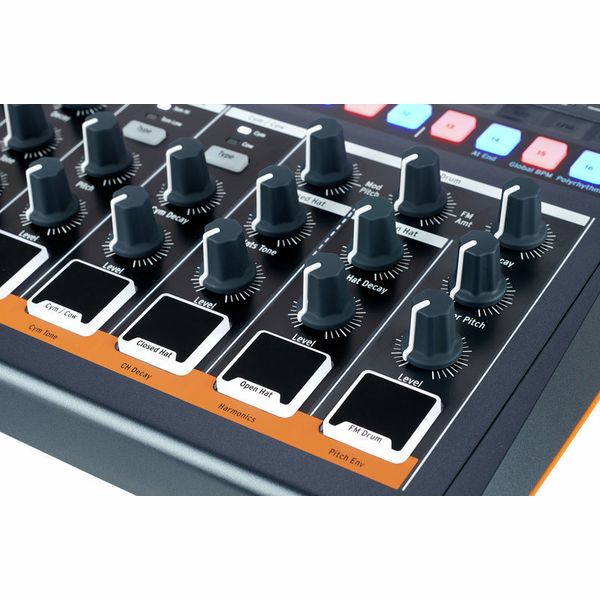
Arturia's DrumBrute Impact is a compact analogue drum machine built around classic drum synthesis and a performance-oriented sequencer. Designed for hands-on beat creation, it delivers a distinctive palette of punchy analogue sounds in a streamlined desktop format. Ten drum voices – kick, snare, toms, cymbal, cowbell, hi-hats and an FM drum voice – provide a versatile rhythmic toolkit for electronic music production. Each instrument features dedicated controls for shaping its character directly from the front panel, while the absence of menus or patch memory keeps the workflow immediate and tactile. Its compact design and clear control layout make the DrumBrute Impact equally suited to studio production, live performance, or portable hardware setups.

)
Analogue drum creation
The DrumBrute Impact's sound engine is built around ten fully analogue drum voices, each with its own synthesis circuit and sequencer track. The kick and snare deliver classic analogue punch, while hi-hats, toms, cymbal, and cowbell add textural variety. A dedicated FM Drum voice introduces metallic and percussive tones through a simple two-operator frequency modulation design, ranging from sharp percussive attacks to harsher industrial timbres. Individual parameters such as pitch, tone, or decay allow each instrument to be adjusted directly from the panel, encouraging real-time sound design. The master distortion circuit adds further character, driving the mix with warm saturation and reinforcing the low-end impact of the beat.
)
Connectivity and integration
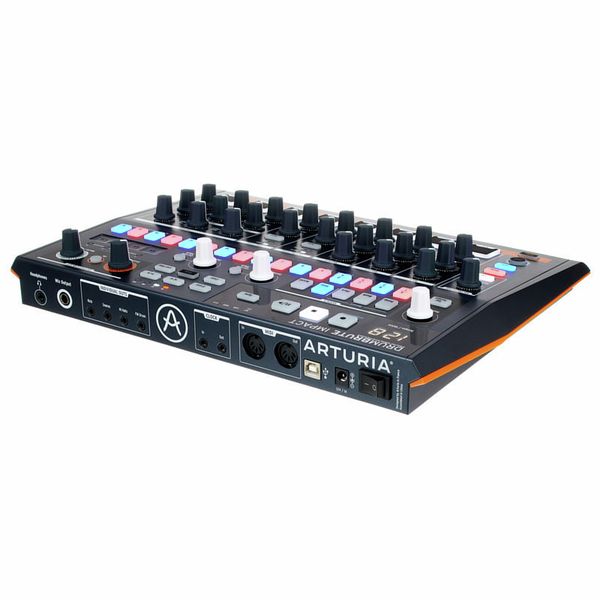
The DrumBrute Impact is suited to both hardware and computer-based production environments. Its mono master output is joined by four individual outputs, enabling per-voice routing for external processing or mixing. MIDI In and Out ports enable synchronisation with hardware instruments, while USB provides both MIDI connectivity and access to Arturia's MIDI Control Center software for pattern backup, system configuration, and deeper sequencer control. Analogue clock input and output support multiple sync standards, allowing the DrumBrute Impact to operate as master or slave within modular or vintage sync setups. This flexible connectivity places the DrumBrute Impact at the centre of hybrid studios, live rigs, or portable hardware setups.
)
About Arturia
Arturia's success story began with software emulations of well-known analogue synthesizers such as the Moog Minimoog, Sequential Prophet-5, and Oberheim SEM. The popular software instruments included in the V Collection are still flagship products of the French developer today. Over time, Arturia has gradually expanded its range and now also offers a host of hardware devices, ranging from synthesizers and keyboard controllers to sequencers. Since then, the former software developer has thus also become a household name in the world of analogue synthesizers and other equipment.
)
Rhythmic mastermind
The DrumBrute Impact's built-in step sequencer – derived from Arturia's BeatStep architecture – is central to its performance. Patterns can contain up to 64 steps, with 64 patterns stored internally (4 banks of 16). Both real-time and step programming are supported, allowing rhythms to be recorded from the pads or constructed step-by-step using the TR-style sequencer interface. Each track can operate with independent length to create polyrhythmic structures, while swing and micro-timing adjustments introduce subtle groove variations. Additional performance tools include step repeats (ratchets), accent sequencing, pattern chaining, and a randomness control that adds evolving rhythmic variation during playback. The Looper and Roller functions further enhance live performance, triggering dynamic fills, stutters, and rhythmic transformations directly from the touch strip. Further sequencer parameters – including randomness behaviour and MIDI mapping – can be configured via Arturia's MIDI Control Center software.
In the spotlight
Color sound variations
One of the DrumBrute Impact's standout features is the Color function, which dramatically alters the tonal character of each drum voice. Activated globally or programmed on individual sequencer steps, Color modifies parameters such as drive, pitch, filtering, or decay depending on the instrument. This effectively adds a second sound layer to every voice, allowing patterns to alternate between standard and Color variations within the same sequence. Combined with accent programming and step repeats, the Color system lets patterns and rhythmic textures evolve freely, in perfect sync with the performance workflow.
)
